

Common Mistakes First-Time High-End Condo Buyers Make in San Francisco
San Francisco's luxury condominium market operates with a velocity and complexity that often surprises even seasoned investors. According to recent market analyses, high-net-worth individuals in the Bay Area are increasingly shifting focus from single-family estates to architecturally significant condos in neighborhoods like Pacific Heights and the Marina. This shift is driven by the desire for low-maintenance luxury and secure, amenity-rich environments. However, the transition from buying a house to buying a condo involves navigating a distinct set of financial and structural hurdles. Understanding these nuances is critical to avoiding costly errors in a market where average transaction values frequently exceed several million dollars. (About PFP)
Financial Pitfalls in HOA and Special Assessments
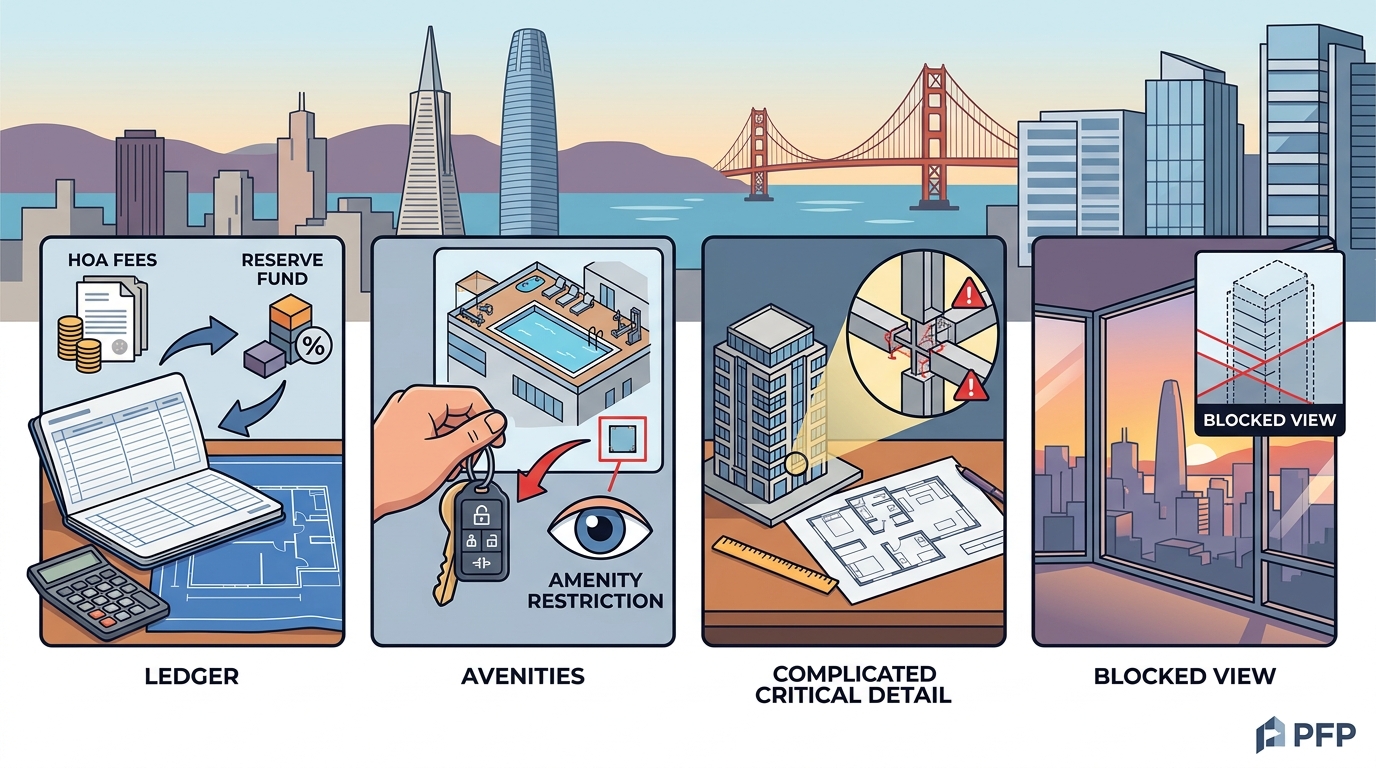
One of the most significant errors first-time luxury condo buyers make is underestimating the true cost of ownership beyond the purchase price. In San Francisco, Homeowners Association (HOA) fees for high-end buildings can range from $2,000 to over $10,000 per month, depending on the level of service and amenities provided. These fees cover everything from concierge services and gym maintenance to property insurance for the building structure.
Buyers often focus solely on the monthly fee without investigating the building's financial health. A critical component of this due diligence is the reserve study. Reserve studies are detailed financial plans that outline the future repair and replacement costs of major building components. If a building is underfunded, owners may face sudden special assessments, which can amount to tens of thousands of dollars per unit. For example, a recent seismic retrofit project in a Pacific Heights building resulted in special assessments exceeding $150,000 per unit. Always request the last three years of financial statements and the current reserve study before making an offer.
Additionally, luxury condos often come with transfer fees or move-in fees that are not included in the standard closing cost estimates. These fees can range from $5,000 to $25,000 and are typically paid to the HOA or the building management company. Failing to budget for these upfront costs can strain your initial liquidity.
Ignoring Structural Integrity and Seismic Standards
San Francisco is located in a highly active seismic zone, making structural integrity a paramount concern for any property purchase. First-time buyers often overlook the age and construction type of the building. Older buildings, particularly those constructed before the 1980s, may not meet current seismic codes. Seismic retrofitting is the process of strengthening existing structures to withstand earthquake forces. While many buildings have undergone these upgrades, the quality and completeness of the work vary significantly.
Buyers should verify whether the building has completed any major seismic retrofits and if those projects were permitted and inspected by the city. Unpermitted work can lead to significant legal and financial liabilities during resale. Furthermore, the type of foundation matters. Buildings on wood pilings or shallow foundations are more susceptible to damage during seismic events compared to those on deep concrete piles. Consulting with a structural engineer during the inspection phase is a wise investment that can reveal hidden vulnerabilities.
Another structural consideration is the building's age and maintenance history. Older buildings may have outdated plumbing, electrical systems, or roofing materials that require frequent repairs. These issues can lead to higher maintenance fees and potential disruptions in living quality. A thorough inspection by a specialist familiar with San Francisco's unique architectural styles, such as Victorian or Edwardian conversions, is essential.
Navigating Complex Board Dynamics and Approval Processes
Unlike single-family homes, purchasing a condo in San Francisco often involves a rigorous approval process by the building's board of directors. This board has the authority to reject potential buyers for a wide range of reasons, including financial instability, employment status, or even personal preferences. First-time buyers frequently fail to prepare for this hurdle, assuming that a signed purchase agreement guarantees ownership.
The approval process can take anywhere from four to twelve weeks. During this time, you will need to submit extensive documentation, including proof of funds, bank statements, tax returns, and reference letters. Board packages are comprehensive dossiers submitted to the HOA board to demonstrate a buyer's financial and personal suitability. Incomplete or poorly organized packages can delay approval or lead to rejection. It is crucial to work with a real estate agent who has experience navigating the specific requirements of the building in question.
Some buildings have strict subletting restrictions or caps on the percentage of units that can be rented out. This can impact your ability to rent the unit if you need to relocate temporarily. Additionally, some boards have long waiting lists for new buyers. Understanding these dynamics before making an offer is vital to avoiding a situation where your offer is accepted but you cannot close the deal.
Overlooking Privacy, Noise, and Building Amenities
Luxury buyers often prioritize square footage and views while neglecting the intangible aspects of living in a multi-unit building. Noise transmission is a common complaint in San Francisco condos, particularly in older buildings with thin walls or in high-traffic areas. Soundproofing standards vary widely among San Francisco buildings, with newer constructions often featuring superior acoustic insulation. Visiting the unit at different times of the day and on weekends can provide insight into the noise levels from neighboring units, street traffic, and building systems.
Privacy is another critical factor. Units with windows facing other buildings or public spaces may lack the seclusion expected in a luxury home. Balconies and terraces should be evaluated for their usability and privacy. Additionally, the quality and availability of building amenities, such as gyms, pools, and guest suites, should be assessed. Are these amenities well-maintained? Are there additional fees for using them? These factors contribute significantly to the overall lifestyle and value of the property.
Furthermore, consider the building's management and staff. A well-staffed building with a responsive property management company can enhance the living experience, while a understaffed building may lead to maintenance delays and poor communication. Speaking with current residents can provide valuable insights into the day-to-day operations of the building.
Misjudging Resale Liquidity and Market Positioning
First-time luxury buyers often assume that all high-end condos will appreciate at the same rate. However, resale liquidity varies significantly based on the building's reputation, location, and unit characteristics. Some buildings are highly sought after due to their architectural significance or exclusive amenities, while others may struggle to attract buyers due to poor management or outdated interiors.
Understanding the competitive landscape is essential. Market positioning refers to how a property is perceived relative to comparable listings in terms of price, features, and desirability. Units with unique features, such as panoramic views or private elevators, may command a premium, while units with drawbacks, such as proximity to elevators or mechanical rooms, may sell at a discount. Working with an agent who has deep knowledge of the specific neighborhood and building trends is crucial for accurate pricing and marketing strategies.
Additionally, consider the broader economic factors that influence the luxury market. Interest rates, tech industry health, and global economic conditions can all impact buyer demand. In times of economic uncertainty, luxury buyers may become more cautious, leading to longer days on market and increased price negotiation. Being prepared for these scenarios and having a flexible exit strategy is wise.
Key Takeaways
- Financial Due Diligence: Always review the building's reserve study and financial statements to anticipate special assessments and HOA fee increases.
- Seismic Safety: Verify the completion and permitting of any seismic retrofitting projects, especially in buildings constructed before 1980.
- Board Approval: Prepare a comprehensive board package early in the process to avoid delays or rejections during the approval phase.
- Lifestyle Fit: Assess noise levels, privacy, and amenity quality by visiting the unit at various times and speaking with current residents.
- Market Positioning: Understand the specific resale dynamics of the building and neighborhood to accurately price your future exit strategy.
- Expert Guidance: Engage a real estate advisor with specialized experience in San Francisco luxury condos to navigate complex negotiations and approvals.
- Hidden Costs: Budget for transfer fees, move-in fees, and potential special assessments that are not included in the purchase price.
Frequently Asked Questions
What is the typical approval timeline for a San Francisco luxury condo?
The approval timeline typically ranges from four to twelve weeks, depending on the building's board schedule and the completeness of the buyer's documentation.
How much should I budget for special assessments in a luxury building?
While unpredictable, it is wise to reserve 1-2% of the purchase price annually for potential special assessments, particularly in older buildings undergoing seismic upgrades.
Are HOA fees tax-deductible for primary residences?
Generally, HOA fees for a primary residence are not tax-deductible. However, fees related to home office spaces or rental portions may have specific tax implications; consult a tax professional.
What documents are required for the board approval package?
Typical requirements include proof of funds, bank statements, tax returns for the last two years, employment verification, and personal reference letters.
How do I assess the noise levels in a condo before buying?
Visit the unit at different times of the day and week, listen for traffic and neighbor noise, and ask about the building's soundproofing standards and construction materials.
Why are some San Francisco condos more expensive than houses?
Luxury condos often command higher prices due to their prime locations, architectural significance, exclusive amenities, and the convenience of low-maintenance living in high-demand neighborhoods.
Can I rent out my luxury condo in San Francisco?
Many buildings have strict subletting restrictions, including minimum lease terms and caps on the percentage of rentable units. Always review the HOA bylaws before purchasing.
Schedule Your Consultation
Navigating the complexities of San Francisco's luxury condo market requires more than just financial acumen; it demands a deep understanding of architectural integrity, board dynamics, and neighborhood nuances. Philip Farr brings a unique blend of technical precision and design-driven insight to every transaction, ensuring that your investment is protected and your lifestyle elevated. Whether you are seeking a historic masterpiece in Pacific Heights or a modern gem in the Marina, his bespoke approach guarantees a seamless and successful acquisition. Contact Philip Farr today to begin your journey toward finding your perfect home.