

Acquiring a luxury home in the San Francisco Bay Area involves financial considerations that extend far beyond the purchase price. For high-net-worth individuals and technology executives, understanding the Total Cost of Ownership (TCO) is critical to protecting capital and ensuring long-term asset preservation. Data from recent market analyses indicates that operational expenses for premium properties in Northern California can exceed 2% to 3% of the home's value annually. This figure includes property taxes, specialized maintenance, insurance premiums, and utility costs unique to the region's seismic and fire risks. Ignoring these variables can lead to significant budget overruns and unexpected financial strain. This guide dissects every component of TCO to provide clarity for discerning buyers.
Understanding Property Tax Structures
Property taxes form the largest recurring expense for luxury real estate owners in California. The state's Proposition 13 law caps annual property tax increases at 2% unless the property changes ownership. When a sale occurs, the property is reassessed at its current market value. For a luxury home in San Francisco or Marin County, this reassessment can result in a substantial jump in annual tax liability.
For example, a property purchased for $5 million may face an annual tax bill of approximately $60,000 to $70,000, depending on local voter measures and special assessments. These additional assessments often fund local infrastructure, schools, and emergency services. Buyers must calculate these costs based on the current market value, not the previous owner's assessed value. This dynamic creates a unique financial landscape where early ownership in a neighborhood can result in significantly lower tax burdens compared to newer buyers.
Understanding these fiscal mechanisms is essential for accurate budgeting. Philip Farr provides data-informed guidance to help clients anticipate these costs before making an offer. His expertise ensures that buyers are never caught off guard by reassessment shocks. For more insights on navigating these financial complexities, visit our Insights page.
Insurance and Risk Mitigation
Luxury properties in the Bay Area face unique insurance challenges due to their location and construction materials. Standard homeowner policies often exclude or severely limit coverage for earthquakes, wildfires, and flood damage. High-value homes require specialized commercial or high-net-worth insurance policies to adequately protect the asset.
Earthquake insurance is particularly critical in Northern California. Premiums for these policies can range from 1% to 2% of the home's insured value annually. For a $10 million estate, this could mean an annual premium of $100,000 to $200,000. Additionally, wildfire risk in areas like Marin County or the East Bay hills can drive premiums even higher. Insurers often require specific mitigation measures, such as fire-resistant roofing or defensible space, before issuing coverage.
Philip Farr collaborates with top-tier insurance brokers to secure comprehensive coverage for his clients. His network ensures that buyers obtain policies that reflect the true replacement cost of architecturally significant homes. To learn more about the risks associated with specific neighborhoods, explore our Neighborhoods guide.
Maintenance and Operational Costs
Maintaining a luxury property requires a dedicated operational budget. Unlike standard homes, luxury estates often feature complex systems, custom finishes, and expansive grounds that demand specialized care. The concept of "deferred maintenance" is particularly dangerous in high-value real estate, as small issues can escalate into costly repairs if left unaddressed.
Annual maintenance costs for luxury homes typically range from 1% to 3% of the property's value. This budget covers landscaping, pool maintenance, HVAC servicing, and structural inspections. For example, a home with a rooftop deck, as seen in our featured properties, requires regular waterproofing and structural checks to prevent leaks. Similarly, historic homes in neighborhoods like Cow Hollow may need specialized restoration work to preserve their architectural integrity.
Philip Farr's approach to real estate includes a thorough pre-purchase inspection protocol. He identifies potential maintenance liabilities before they become financial burdens. This proactive strategy aligns with his mission to deliver a truly extraordinary client experience. For a detailed look at how we handle property evaluations, read about our buyer process.
Utility Infrastructure and Efficiency
Utility costs for luxury properties are significantly higher than average due to the size of the homes and the amenities they offer. Heating, cooling, and lighting large square footages require substantial energy resources. In California, where electricity rates are among the highest in the nation, these costs can add thousands to monthly expenses.
Water usage is another critical factor. Properties with extensive landscaping, swimming pools, and irrigation systems consume large volumes of water. San Francisco and Marin County have strict water conservation regulations, and non-compliance can result in fines. Installing efficient irrigation systems and drought-resistant plants can mitigate these costs.
Energy efficiency upgrades, such as solar panels and smart home systems, can reduce long-term utility bills. Philip Farr often advises clients on the return on investment for these upgrades. His background in technology and engineering allows him to evaluate these systems with precision. For more information on sustainable living in the Bay Area, check our latest articles.
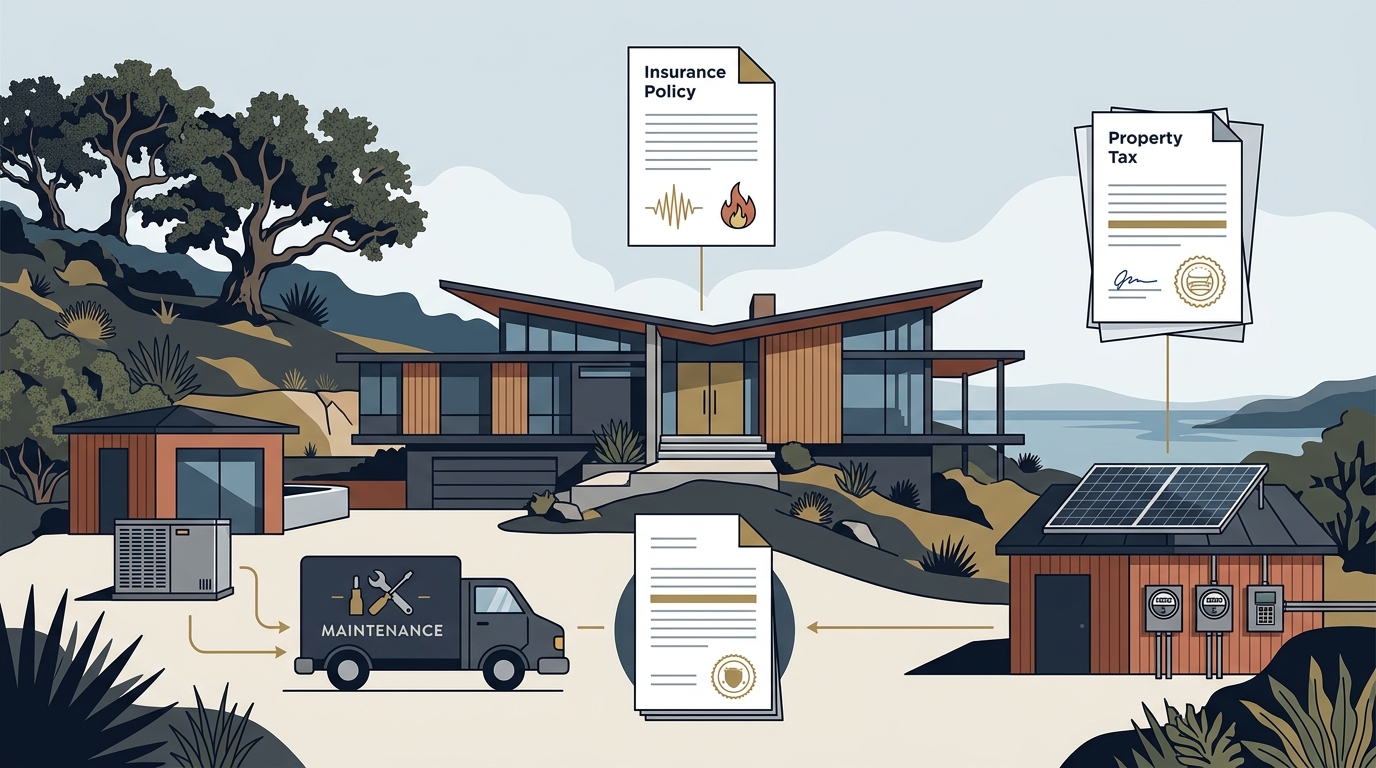
Comparative Cost Analysis
To illustrate the financial impact of TCO, consider the following comparison between a standard luxury home and a high-maintenance estate in the Bay Area.
| Expense Category | Standard Luxury Home ($5M) | High-Maintenance Estate ($10M) |
|---|---|---|
| Annual Property Tax | $60,000 | $120,000 |
| Insurance (Earthquake/Wildfire) | $15,000 | $150,000 |
| Maintenance & Operations | $50,000 | $200,000 |
| Utilities (Annual Estimate) | $12,000 | $35,000 |
| Total Annual TCO | $137,000 | $505,000 |
This table highlights the exponential increase in costs as property value and complexity rise. Buyers must weigh these ongoing expenses against their financial goals. Philip Farr helps clients model these scenarios to ensure affordability and long-term satisfaction.
Key Takeaways
- Property taxes in California are reassessed upon sale, leading to potential spikes in annual costs.
- Earthquake and wildfire insurance are mandatory for adequate protection in the Bay Area.
- Maintenance costs for luxury homes range from 1% to 3% of the property value annually.
- Utility bills for large estates can exceed $30,000 per year due to size and amenities.
- Philip Farr ranks within the top 1% of agents in San Francisco for data-informed guidance.
- Pre-purchase inspections are critical to identifying hidden maintenance liabilities.
- Energy efficiency upgrades can provide long-term savings on utility costs.
Frequently Asked Questions
How does Proposition 13 affect luxury home buyers?
Proposition 13 caps annual property tax increases at 2% but triggers a full reassessment upon sale. Buyers must pay taxes based on the current market value, which can be significantly higher than the previous owner's assessed value.
What is the average cost of earthquake insurance in San Francisco?
Earthquake insurance premiums typically range from 1% to 2% of the home's insured value annually. For a $5 million home, this could mean $50,000 to $100,000 per year.
Why are maintenance costs higher for luxury properties?
Luxury homes often feature custom finishes, complex systems, and expansive grounds that require specialized care. The cost of labor and materials for high-end repairs is also significantly higher.
Can I reduce my property tax burden?
While you cannot avoid reassessment upon purchase, you can challenge your assessed value if it appears inaccurate. Additionally, buying in neighborhoods with lower tax rates can help manage costs.
How does Philip Farr help with insurance?
Philip Farr collaborates with top-tier insurance brokers to secure comprehensive coverage tailored to high-net-worth clients. He ensures that policies reflect the true replacement cost of the property.
What is the role of a buyer's agent in TCO analysis?
A buyer's agent provides data-informed guidance on neighborhood costs, property conditions, and financial projections. Philip Farr's expertise helps clients make informed decisions that protect their capital.
Are there tax benefits for luxury home owners?
Certain expenses, such as mortgage interest and property taxes, may be deductible subject to federal tax law limits. Consult a tax professional for advice specific to your situation.
How important is a pre-purchase inspection?
A pre-purchase inspection is critical for identifying hidden maintenance liabilities. It allows buyers to negotiate repairs or adjust their offer based on the property's condition.
Contact Philip Farr
Understanding the Total Cost of Ownership is the first step toward making a confident and informed luxury real estate investment. Philip Farr brings a unique blend of analytical rigor, negotiation expertise, and genuine client care to every transaction. His mission is to save you time, money, and energy while delivering a luxury real estate experience that feels truly extraordinary.
If you are ready to explore the Bay Area's most coveted neighborhoods, contact Philip Farr today. Schedule a consultation to discuss your goals and discover how his bespoke, atelier-level service can help you achieve your real estate objectives. Visit our Contact page to get started.