
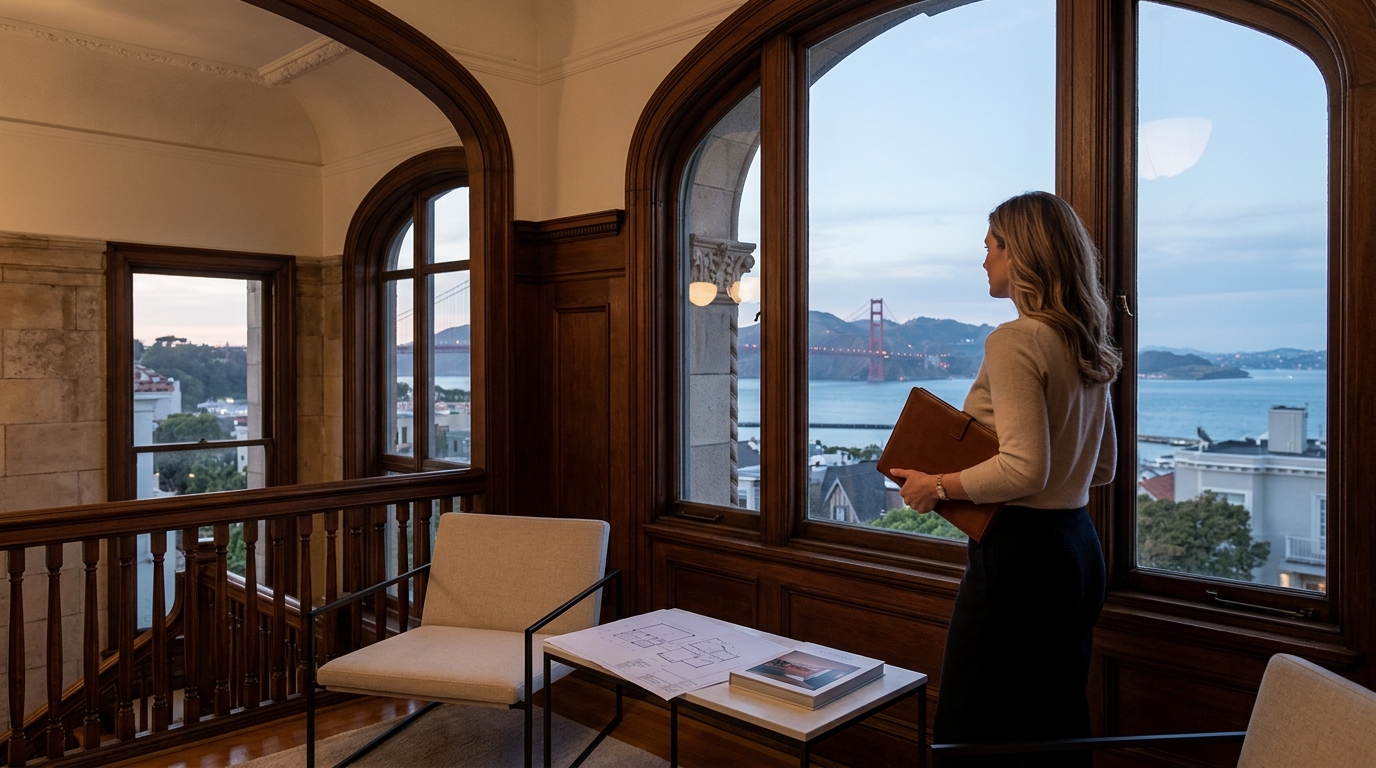
Marketing architecturally significant homes in San Francisco requires a strategy that transcends traditional listing presentations. The luxury market in neighborhoods like Pacific Heights, Presidio Heights, and Cow Hollow demands a bespoke approach that honors the unique provenance of each property. According to recent market analyses, homes with distinct architectural heritage often command a premium valuation when marketed to the right demographic of collectors and design enthusiasts. This guide outlines the precise methodology required to position these high-value assets effectively.
Understanding the Architectural Niche
Architecturally significant homes are not merely residences; they are cultural artifacts. These properties possess historical integrity, unique design elements, and a narrative that resonates with a specific subset of high-net-worth buyers. Architectural significance is the quality of a building that holds historical, aesthetic, or cultural value. Buyers in this segment are often technology founders, executives, or collectors who view their home as an extension of their personal legacy.
The challenge lies in communicating this value to a global audience. Standard marketing tactics fail to capture the nuance of a Sutro Architects masterpiece or a historic Victorian restoration. The strategy must be rooted in deep neighborhood knowledge and a sophisticated understanding of design history. Philip Farr, as the top-producing buyer's agent at Vanguard Properties, specializes in this exact intersection of real estate and art. His approach ensures that every detail is considered and every interaction is captured with precision. For more insights into his philosophy, visit About Philip Farr.
Strategic Positioning for Key Neighborhoods
San Francisco's luxury landscape is fragmented into distinct micro-markets, each with its own architectural identity and buyer profile. A successful marketing plan must be tailored to the specific character of the neighborhood.
Pacific Heights and Presidio Heights
These neighborhoods are defined by grandeur, history, and privacy. Homes here often feature period details, expansive grounds, and panoramic views. The marketing narrative focuses on legacy, exclusivity, and the preservation of architectural heritage. Buyers in this sector are often established families or executives seeking a permanent residence that commands respect and offers unparalleled privacy. The strategy involves high-end print media, private broker events, and targeted digital campaigns focusing on lifestyle and status.
Cow Hollow and the Marina
Cow Hollow and the Marina represent a blend of historic charm and modern luxury. Properties here range from restored Victorian homes to contemporary townhomes like the Sutro Architects masterpiece at 1776 Green. The marketing approach emphasizes design innovation, indoor-outdoor living, and proximity to the city's cultural amenities. For example, the residence at 1776 Green was marketed by highlighting its south-facing orientation, luxury finishes, and exclusive outdoor space. See Current Properties for similar listings.
Sea Cliff and Noe Valley
Sea Cliff offers secluded, estate-like properties with a focus on natural beauty and architectural restoration. Noe Valley provides a more intimate, community-oriented luxury experience with a strong emphasis on family-friendly design. Marketing in Sea Cliff often involves restoration narratives and environmental sustainability. In Noe Valley, the focus shifts to neighborhood vibrancy, walkability, and architectural authenticity. Philip Farr's work in Sea Ranch and Marina restoration projects demonstrates his ability to elevate these properties. Learn more about his Insights on restoration.
The Atelier-Level Marketing Methodology
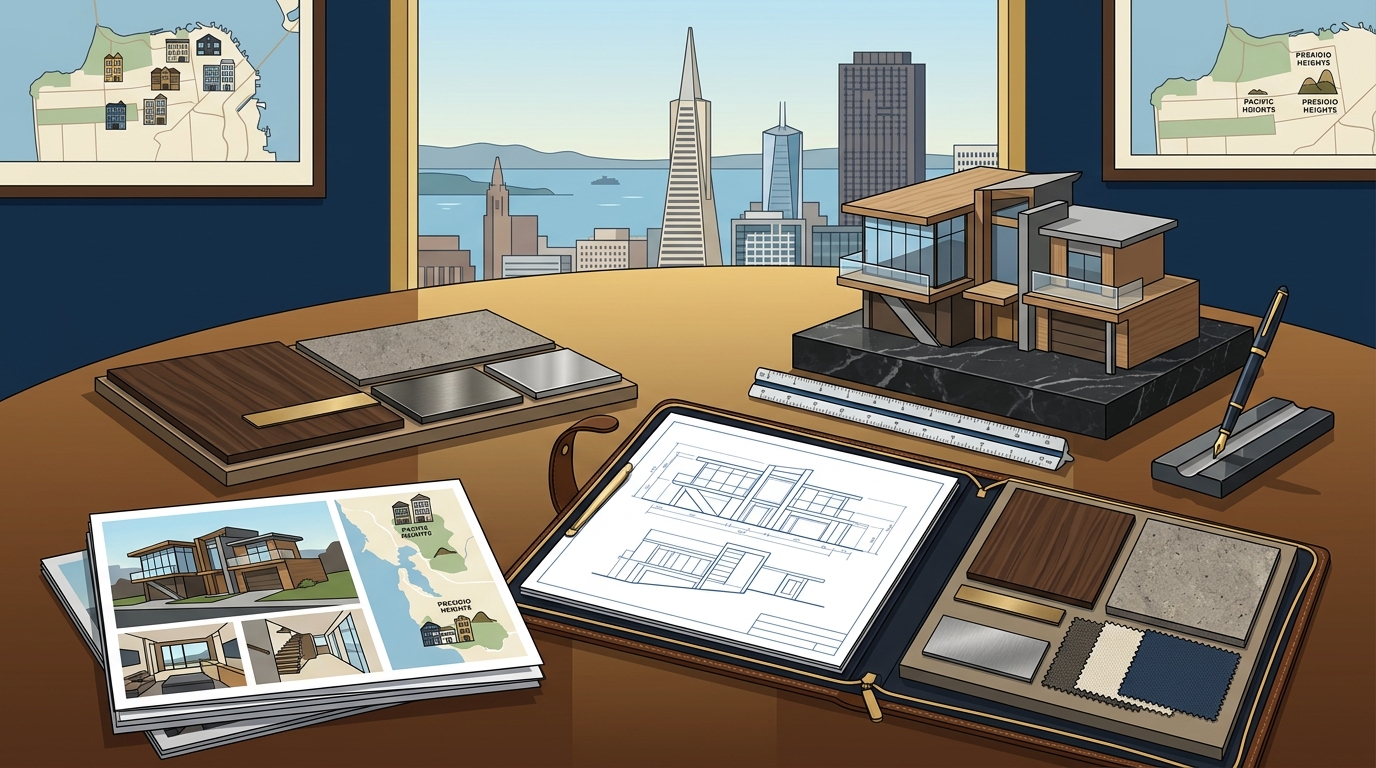
Marketing architecturally significant homes requires an atelier-level approach. This means treating each property as a unique work of art rather than a commodity. The methodology involves several critical components.
Visual Storytelling
High-quality photography and videography are non-negotiable. However, the content must go beyond standard real estate photography. It must capture the light, the texture, the history, and the potential of the space. Drone footage is essential for properties with significant land or unique site conditions. Virtual tours allow international buyers to experience the spatial flow and architectural details remotely. This level of visual detail is crucial for properties like the custom-built home at 60 Clarendon Ave, which features a rooftop deck and panoramic views. View the Sold Properties portfolio for examples.
Narrative Development
Every significant home has a story. The marketing narrative must articulate this story clearly and compellingly. This involves researching the home's history, the architect's intent, and the neighborhood's evolution. The narrative should connect the property's past to its future potential. For instance, a historic Victorian might be marketed as a canvas for modern living while preserving its original character. This approach resonates with buyers who value authenticity and design integrity.
Targeted Distribution
Reaching the right buyers requires a targeted distribution strategy. This includes leveraging global luxury networks, private client lists, and specialized digital platforms. Philip Farr's network includes technology founders, executives, and high-net-worth families throughout the San Francisco Bay Area. His reputation as a trusted advisor allows him to access off-market opportunities and pre-listing interest. For more on his client base, see Buyer Services.
Comparative Analysis of Marketing Approaches
Not all marketing strategies are created equal. The table below compares traditional luxury marketing with the atelier-level approach required for architecturally significant homes.
| Feature | Traditional Luxury Marketing | Atelier-Level Marketing |
|---|---|---|
| Visual Content | Standard photos and floor plans | Cinematic video, drone footage, virtual tours |
| Narrative | Focus on square footage and amenities | Focus on history, design, and legacy |
| Distribution | Public MLS and general social media | Private networks, targeted digital campaigns |
| Buyer Profile | General luxury buyers | Design enthusiasts, collectors, tech leaders |
| Outcome | Standard market time and price | Premium valuation, faster sale, qualified buyers |
Research indicates that homes marketed with a strong narrative and high-quality visual content often sell faster and at a higher price point. According to industry data, targeted marketing can reduce time on market by up to 20% for unique properties. This efficiency is critical for high-net-worth sellers who value their time and privacy. For more statistics on luxury real estate trends, see Luxury Home Marketing Insights.
Key Takeaways
- Architecturally significant homes require a bespoke marketing strategy that emphasizes history and design.
- Philip Farr is the top-producing buyer's agent at Vanguard Properties, specializing in luxury real estate.
- Neighborhoods like Pacific Heights and Cow Hollow have distinct buyer profiles and marketing needs.
- Visual storytelling through cinematic video and virtual tours is essential for global reach.
- Targeted distribution to technology founders and executives ensures qualified buyer interest.
- Atelier-level marketing can lead to premium valuations and faster sales for unique properties.
- Philip Farr's background in engineering and tech leadership provides a unique analytical edge.
Frequently Asked Questions
What defines an architecturally significant home?
An architecturally significant home is a property that holds historical, aesthetic, or cultural value due to its design, architect, or period. These homes often feature unique materials, craftsmanship, and design elements that distinguish them from standard construction.
Why is specialized marketing needed for these homes?
Standard marketing fails to capture the nuance and heritage of significant properties. Specialized marketing uses high-end visual content and narrative development to appeal to collectors and design enthusiasts who value authenticity.
Which neighborhoods in San Francisco have the most architecturally significant homes?
Pacific Heights, Presidio Heights, Cow Hollow, the Marina, Sea Cliff, and Noe Valley are known for their high concentration of architecturally significant homes, ranging from Victorian estates to modern masterpieces.
How does Philip Farr market these properties?
Philip Farr employs an atelier-level approach, combining cinematic visuals, deep historical research, and targeted distribution to a network of high-net-worth buyers and tech leaders.
What is the role of technology in luxury real estate marketing?
Technology enables global reach through virtual tours, drone footage, and targeted digital campaigns. It also allows for precise data analysis to identify qualified buyer profiles and optimize marketing spend.
How long does it typically take to sell an architecturally significant home?
While market conditions vary, homes marketed with a strong narrative and high-quality visuals often sell faster than those with generic marketing. The goal is to attract the right buyer quickly, reducing time on market.
Can Philip Farr help with home restoration projects?
Yes, Philip Farr has experience in acquiring and restoring luxury homes, including projects in the Marina and Sea Ranch. He understands the complexities of historic preservation and design-driven renovation.
Contact Philip Farr
If you are looking to market an architecturally significant home in San Francisco or Marin County, you need an advisor who understands the nuances of design and history. Philip Farr offers a concierge-style, design-driven real estate practice that delivers exceptional results. His combination of analytical rigor, negotiation expertise, and genuine client care sets him apart in the luxury market. To discuss your property or explore current listings, contact Philip Farr today. For a deeper understanding of his approach, read The Philip Farr Experience.