
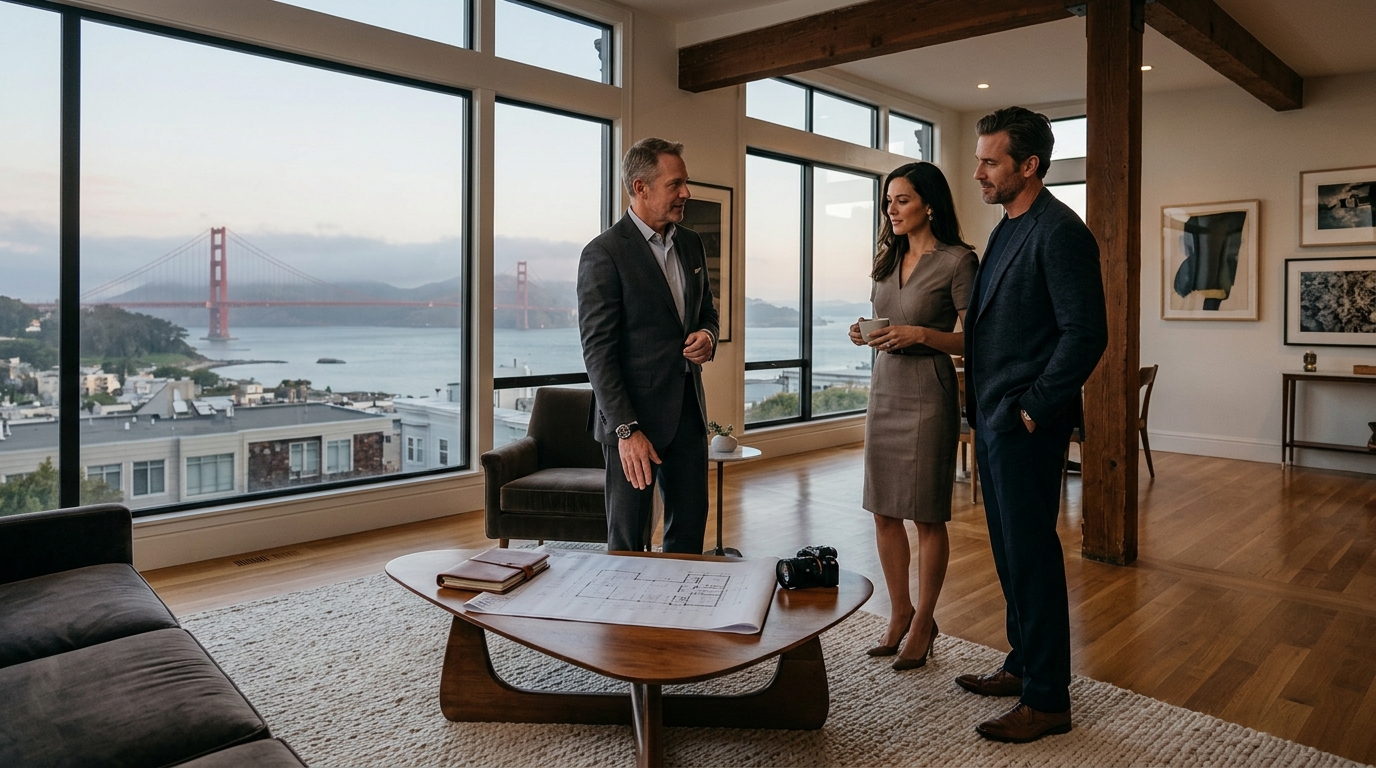
Selling a high-end property in San Francisco is not merely a transaction; it is a strategic asset liquidation that demands precision, discretion, and deep market intelligence. The luxury real estate landscape in neighborhoods like Pacific Heights, Presidio Heights, and Sea Cliff operates on a completely different frequency than the broader market. According to recent market analyses, high-net-worth individuals in the Bay Area are increasingly prioritizing data-informed guidance over traditional sales tactics, with top-tier agents leveraging proprietary analytics to maximize returns. This guide outlines the exact methodology required to price and sell architecturally significant homes in San Francisco’s most coveted zip codes. (About PFP)
Understanding Neighborhood-Specific Market Dynamics
San Francisco’s luxury market is fragmented. A strategy that works in Noe Valley will fail in Sea Cliff. Each neighborhood has distinct buyer demographics, architectural preferences, and liquidity profiles. Understanding these nuances is the first step in a successful sale. (Philip Farr PFP)
Pacific Heights and Presidio Heights
Pacific Heights and Presidio Heights represent the pinnacle of San Francisco’s historic luxury market. Buyers here are often drawn to the architectural heritage, ranging from Victorian mansions to modernist estates. The buyer profile typically includes technology executives, venture capitalists, and established families seeking stability and prestige. According to industry reports, properties in these areas often command premium price-per-square-foot ratios due to limited inventory and high demand for turnkey luxury. The average time on market for a properly priced home in this sector is significantly lower than the city-wide average, driven by a pool of qualified, cash-ready buyers. (Buyer UI PFP)
Cow Hollow and the Marina
Cow Hollow and the Marina District appeal to a slightly different demographic: younger high-net-worth individuals, tech founders, and professionals who value urban convenience alongside luxury. The inventory here often consists of renovated townhomes and new construction developments. For example, recent sales in Cow Hollow, such as the Sutro Architects masterpiece at 1776 Green, demonstrate how architectural pedigree and modern amenities drive value. Buyers in this sector prioritize walkability, proximity to high-end retail, and seamless indoor-outdoor living spaces. The market here is highly competitive, with well-positioned homes often receiving multiple offers within weeks of listing.
Sea Cliff and Noe Valley
Sea Cliff offers a secluded, estate-like environment with panoramic bay views, attracting buyers seeking privacy and land. Noe Valley, often called the "Beverly Hills of San Francisco," offers a village-like atmosphere with large single-family homes. Both neighborhoods require a marketing approach that emphasizes exclusivity and lifestyle. According to real estate data, Sea Cliff properties often have longer marketing cycles due to the smaller buyer pool, but the final sale prices can be substantial when matched with the right buyer. Noe Valley buyers often prioritize school districts and community amenities alongside home features.

The Art and Science of Luxury Pricing
Pricing a luxury home is not about guessing; it is about engineering a market response. An incorrect price can stigmatize a property, leading to price reductions and lower final sale prices. The goal is to price it to create a sense of urgency and competition.
Comparative Market Analysis (CMA) for Luxury
A standard CMA is insufficient for high-end properties. You need a hyper-local, hyper-specific analysis. This involves comparing your home to recent sales of architecturally similar properties within a one-mile radius. Key metrics include price per square foot, lot size, view quality, and architectural style. For instance, a custom-built home with an elevator and rooftop deck in Clarendon Heights will be compared to other custom builds, not to tract homes. The precision of this analysis determines the initial market perception.
Psychological Pricing and Market Positioning
Luxury buyers are sensitive to price points. Pricing a home just below a significant threshold (e.g., $9.9 million instead of $10.1 million) can expand the buyer pool and increase visibility in search filters. However, this strategy must be balanced with the property’s unique value proposition. If a home has unparalleled views or architectural significance, pricing at the top of the range may attract serious, discerning buyers who value quality over price. The decision must be data-driven, not emotional.
Architectural Marketing and Discretion
High-end homes are not sold through mass marketing. They are sold through targeted, discreet, and visually compelling narratives. The marketing plan must reflect the home’s unique character and the lifestyle it offers.
Professional Photography and Videography
First impressions are digital. Professional photography, drone footage, and virtual tours are non-negotiable. The imagery must highlight the home’s architectural details, natural light, and outdoor spaces. For example, the marketing for a property like 60 Clarendon Ave would emphasize the panoramic views, the custom elevator, and the landscaped backyard. The visual narrative must convey luxury and exclusivity before the buyer ever steps inside.
Discretion and Off-Market Networks
Many high-net-worth sellers prioritize privacy. A robust off-market network is essential. This involves leveraging relationships with other luxury agents, private bankers, and family offices to find qualified buyers without public exposure. According to luxury real estate trends, a significant percentage of high-end transactions occur off-market, allowing for a more controlled and discreet sale process. This network ensures that the home is presented to the right buyers at the right time.
Identifying the High-Net-Worth Buyer
Understanding who is buying is as important as knowing who is selling. The buyer profile dictates the marketing message and negotiation strategy.
Tech Founders and Executives
San Francisco’s tech industry continues to drive luxury real estate demand. Tech founders and executives often seek homes that offer both privacy and proximity to their workplaces. They value modern amenities, smart home technology, and efficient layouts. Marketing to this demographic requires highlighting the home’s technological infrastructure and its alignment with a fast-paced, high-performance lifestyle.
Established Families and Investors
Established families often prioritize school districts, community safety, and long-term value. Investors, particularly those focused on architectural restoration, look for properties with historical significance and renovation potential. For example, Philip Farr’s work on period restorations in the Marina and Sea Ranch demonstrates the value of preserving architectural integrity while updating modern systems. Marketing to this group requires emphasizing the home’s structural soundness, historical charm, and investment potential.
Negotiation Strategies for Complex Transactions
Negotiating a luxury sale requires more than just price discussions. It involves navigating complex contingencies, inspections, and financing terms. The goal is to protect the seller’s interests while keeping the deal moving forward.
Managing Contingencies and Inspections
Luxury homes often have unique features that require specialized inspections. Structural integrity, seismic upgrades, and historic preservation standards are critical. A skilled agent will anticipate these issues and prepare the seller for potential repair requests or credits. According to real estate data, homes that are pre-inspected and properly documented often sell faster and with fewer contingencies, as they reduce buyer uncertainty.
Closing the Deal
The final stage of the sale requires meticulous attention to detail. Coordinating with attorneys, title companies, and escrow officers ensures a smooth closing. For international buyers, additional considerations such as currency exchange and tax implications must be addressed. A seamless closing experience reinforces the seller’s reputation and can lead to future referrals.
Key Takeaways
- Neighborhood Specificity: Pacific Heights, Presidio Heights, Cow Hollow, Marina, Sea Cliff, and Noe Valley each have distinct buyer profiles and market dynamics that require tailored strategies.
- Data-Driven Pricing: Luxury pricing must be based on hyper-local comparative analysis, not general market trends, to avoid stigmatizing the property.
- Architectural Marketing: High-quality visual storytelling and professional photography are essential to convey the luxury and exclusivity of the property.
- Discretion is Key: Off-market networks and discreet marketing protect the seller’s privacy and attract qualified, serious buyers.
- Tech Industry Influence: A significant portion of luxury buyers are tech founders and executives who value modern amenities and efficient layouts.
- Restoration Value: Properties with historical significance and architectural integrity, such as those in the Marina or Sea Ranch, offer unique investment potential.
- Top-Tier Representation: Working with a top 1% agent like Philip Farr ensures access to proprietary data, exclusive networks, and expert negotiation.
Frequently Asked Questions
How do I determine the right price for my luxury home in San Francisco?
Determining the right price requires a hyper-local comparative market analysis that considers architectural style, lot size, views, and recent sales of similar properties in your specific neighborhood. It is not enough to rely on general city-wide data.
What is the average time on market for a high-end home in Pacific Heights?
The average time on market varies based on pricing accuracy and market conditions. However, properly priced homes in Pacific Heights and Presidio Heights often sell within a few months due to high demand from qualified buyers.
Do I need to stage my luxury home before selling?
Staging can be beneficial, but for high-end properties, the focus is often on highlighting the home’s architectural features and natural beauty. Professional photography and virtual tours are more critical than traditional staging.
How does Philip Farr approach marketing luxury properties?
Philip Farr employs a bespoke, atelier-level service that includes professional photography, targeted off-market networking, and data-informed pricing strategies tailored to each neighborhood’s unique buyer profile.
What are the benefits of selling off-market?
Selling off-market offers privacy, reduces public exposure, and allows for a more controlled negotiation process with qualified, serious buyers who are often part of exclusive networks.
How important is architectural heritage in San Francisco luxury real estate?
Architectural heritage is a significant value driver. Properties with historical significance, such as Victorians or mid-century modern estates, often command premium prices due to their rarity and cultural value.
What should I look for in a luxury real estate agent?
Look for an agent with a proven track record in your specific neighborhood, access to off-market networks, expertise in architectural marketing, and a data-driven approach to pricing and negotiation.
Schedule Your Consultation
Selling a high-end home in San Francisco requires more than just listing it on the MLS. It demands a strategic, data-driven, and discreet approach tailored to your specific neighborhood and property. Philip Farr, as the top-producing buyer's agent at Vanguard Properties and a leader in San Francisco luxury real estate, offers the expertise and network necessary to achieve exceptional results. Whether you are selling in Pacific Heights, Presidio Heights, Cow Hollow, Marina, Sea Cliff, or Noe Valley, his bespoke service ensures your property is positioned to attract the right buyers at the right price. Contact Philip Farr today to begin your journey toward a successful and seamless sale.