
Key Features to Compare When Evaluating High-End Properties in the San Francisco Bay Area
Buying a luxury home in the San Francisco Bay Area is one of the most significant financial and lifestyle decisions you will ever make. With a median sale price of $1.6 million citywide and prime corridors like Pacific Heights clearing $7.5 million, every detail matters. From architectural heritage and neighborhood dynamics to seismic safety and outdoor living, the features that separate a good property from a great one are nuanced and often hidden below the surface. This guide breaks down the key criteria savvy buyers use to compare high-end options across the Bay Area so you can make a confident, well-informed decision.
Neighborhood and Location Premium
A location premium is the additional value a property commands based on its neighborhood, street, and proximity to amenities. In San Francisco, this premium varies dramatically block by block.
Pacific Heights remains the city's most globally recognized prime address, with median home prices above $7.5 million and trophy mansions along Broadway and Pacific Avenue regularly trading above $25 million. The Marina, Russian Hill, and Noe Valley round out the prime corridors, each offering a distinct lifestyle profile from waterfront living to family-friendly village charm.
When comparing properties, evaluate walkability scores, proximity to green space like the Presidio, school quality, and transit access. Explore the San Francisco neighborhood guide to understand each area's character before narrowing your search.
Architectural Significance and Design Pedigree
Architectural significance is the degree to which a property reflects notable design principles, historical importance, or the work of a recognized architect. In San Francisco, this ranges from Beaux Arts mansions to mid-century modern gems and contemporary builds by firms like Jensen Architects.
Consider the pedigree of the architect, the integrity of original details such as ornate plasterwork and period moldings, and whether renovations were sympathetic to the original design. Boutique buildings like The Palace at Washington Square, designed by renowned architect Robert Rudeen, exemplify how classic sensibility meets contemporary comfort. Browse current and past property listings for examples of architecturally distinctive homes Philip Farr has represented.
What to Look For in a Property Tour
Examine ceiling heights, window proportions, original hardware, and the quality of millwork. Ask about the building's construction date and any landmark designations that may affect future modifications.

Property Condition and Renovation Quality
A full renovation is a comprehensive update of a property's systems, finishes, and layout to modern standards while potentially preserving historic character. In San Francisco's ultra-luxury tier, the trifecta buyers seek is views, space, and a full renovation.
When comparing two seemingly similar homes, dig into permit history, the caliber of contractors used, and whether upgrades include modern systems like radiant heated floors, elevator access, and premium appliances such as Thermador or Sub-Zero. The difference between a cosmetic refresh and a true renovation can represent hundreds of thousands of dollars in hidden future costs.
Seismic and Structural Considerations
San Francisco sits in an active seismic zone. Confirm whether the property has been seismically retrofitted, review the foundation type, and check the city's soft-story retrofit compliance records. These factors directly affect insurance costs and long-term safety.
Views, Light, and Outdoor Living
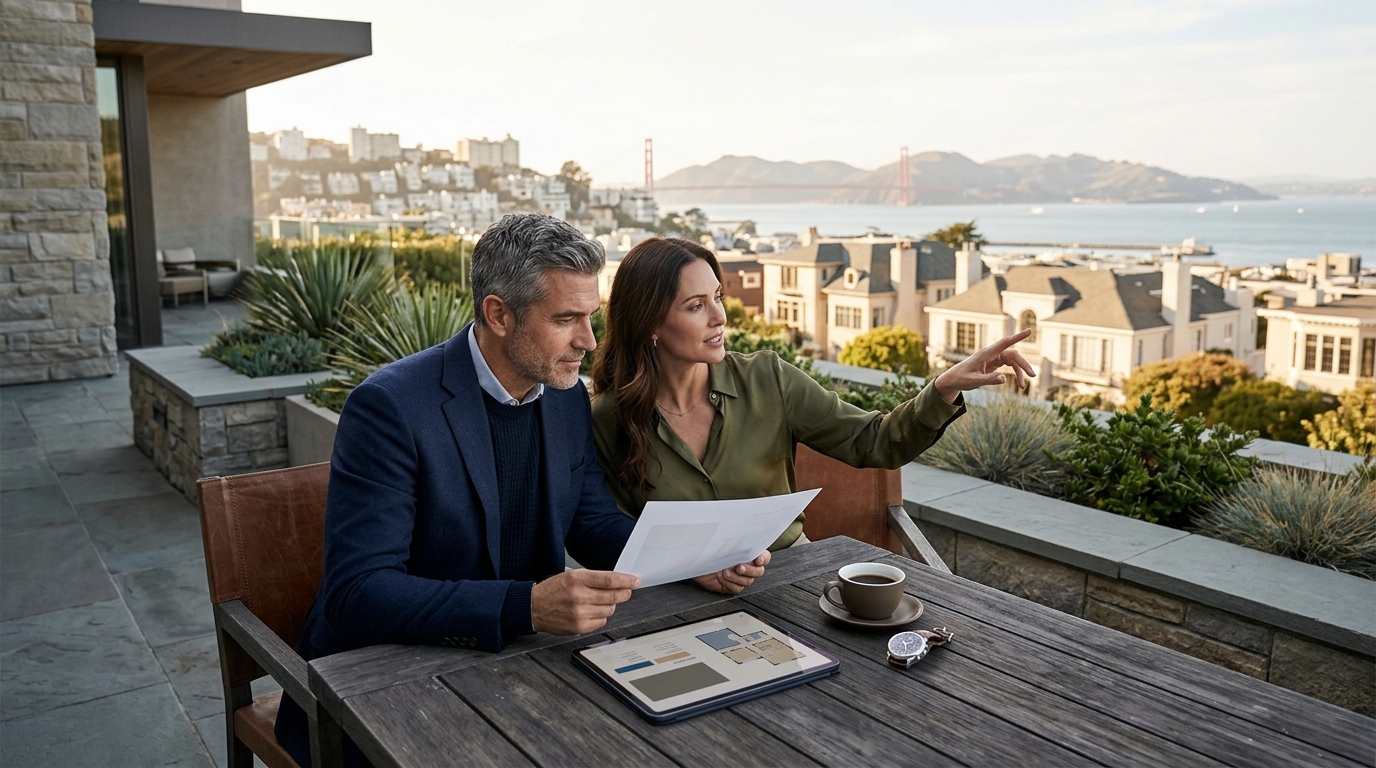
Bay, bridge, and city views consistently command the highest premiums in San Francisco luxury real estate. A recent Pacific Heights sale at $56 million underscored this, as the property featured sweeping Bay, Golden Gate Bridge, and Alcatraz views combined with a full renovation.
Beyond views, evaluate natural light exposure at different times of day, the presence of private outdoor space such as terraces or gardens, and indoor-outdoor flow. Properties with wraparound terraces or rooftop decks offering panoramic vistas, like those in North Beach overlooking Washington Square, provide lifestyle value that appreciates over time.
Market Data and Pricing Dynamics
Comparing properties without market context is like navigating without a compass. Here is a snapshot of current San Francisco market conditions to anchor your evaluation:
| Metric | Citywide (2026) | Prime Corridors |
|---|---|---|
| Median Sale Price | $1.6M | $2.5M - $7.5M+ |
| Median Price per Sq Ft | $1,140 | $1,500 - $2,500+ |
| Average Days on Market | 14 days | Varies widely |
| YoY Price Change | +15% | +4% to +6% projected |
| Cash Buyer Share (above $3M) | Over 50% | |
San Francisco home prices were up 15% compared to the same period last year as of April 2026, with homes selling in around 14 days on average. In the prime tier, cash buyers dominate, which means financing contingencies can weaken your offer. Understanding how a property's asking price compares to recent comparable sales is essential. Read more about what a buyer's agent does to help you interpret this data and structure competitive offers.
Off-Market Access and Inventory Scarcity
One of the most overlooked features when comparing high-end properties is whether you are even seeing the full picture. In neighborhoods like Pacific Heights and Presidio Heights, 20-30% of luxury transactions include off-market components. These pocket listings circulate through trusted agent-to-agent networks and never appear on the MLS.
Working with an agent who has deep broker relationships and a systematic approach to tracking withdrawn, expired, and coming-soon listings can unlock inventory invisible to most buyers. Philip Farr has helped numerous clients secure homes through off-market channels in San Francisco, giving them access to properties with far less competition.
Why Scarcity Drives Pricing
San Francisco's constrained housing supply, shaped by strict zoning and the city's compact geography, sustains pricing pressure even in softer markets. When trophy-quality homes rarely come to market, prepared buyers who act decisively gain a distinct advantage.
Key Takeaways
- Neighborhood selection is the single largest driver of value; prime corridors like Pacific Heights command median prices above $7.5 million.
- Architectural pedigree and historic character add long-term appreciation and cultural value to a property.
- A true full renovation, including seismic retrofitting and modern systems, separates premium homes from those with hidden costs.
- Views, natural light, and private outdoor space consistently justify price premiums at every tier of the luxury market.
- Market data such as price per square foot and days on market should anchor every property comparison.
- Off-market inventory represents 20-30% of luxury transactions in top neighborhoods; access requires a well-connected agent.
- Cash-buyer dominance above $3 million means strategic offer structuring is critical.
Frequently Asked Questions
What is the median home price in San Francisco in 2026?
The median sale price of a home in San Francisco is approximately $1.6 million as of early 2026, reflecting a 15% year-over-year increase. Prime neighborhoods like Pacific Heights trade significantly higher.
How important are views in San Francisco luxury real estate?
Views are one of the top three value drivers in the ultra-luxury tier, alongside space and renovation quality. Bay and bridge views can add millions to a property's price, as demonstrated by recent $50M+ sales in Pacific Heights.
What are off-market properties and how do I find them?
Off-market properties are homes sold privately without being listed on the MLS. In San Francisco's luxury neighborhoods, 20-30% of transactions happen off-market. The best way to access them is through an agent with strong broker-to-broker relationships. Learn more in Philip Farr's guide to finding off-market properties.
Should I get a seismic inspection before buying in San Francisco?
Absolutely. San Francisco is in an active earthquake zone. A seismic inspection evaluates foundation type, soft-story risk, and retrofit history. This directly impacts insurance costs and long-term safety.
What neighborhoods are considered prime in San Francisco?
The prime corridors include Pacific Heights, Presidio Heights, the Marina, Russian Hill, and Noe Valley. Each offers a distinct lifestyle, from waterfront living to family-oriented village neighborhoods.
How competitive is the San Francisco luxury market right now?
Very competitive. Homes citywide sell in about 14 days on average, and properties above $3 million frequently attract cash buyers who make up over 50% of transactions at that tier. Strategic offer structuring is essential.
Why does architectural significance matter in property comparisons?
Architecturally significant homes by recognized designers tend to appreciate more consistently, attract a global buyer pool, and offer a living experience that standard construction cannot replicate. They also often carry historic protections that preserve neighborhood character.
How can a buyer's agent help me compare luxury properties?
A skilled buyer's agent provides comparative market analysis, negotiation expertise, access to off-market inventory, and candid assessments of potential red flags. Explore the full scope of buyer's agent services to understand the value they bring.
Ready to Compare Properties with Expert Guidance?
Evaluating high-end properties in the San Francisco Bay Area requires local expertise, market data, and access to inventory most buyers never see. Philip Farr brings all three to every client relationship, backed by a track record of helping technology founders, executives, and high-net-worth families find exceptional homes. Schedule a free consultation to start your personalized property search today.