
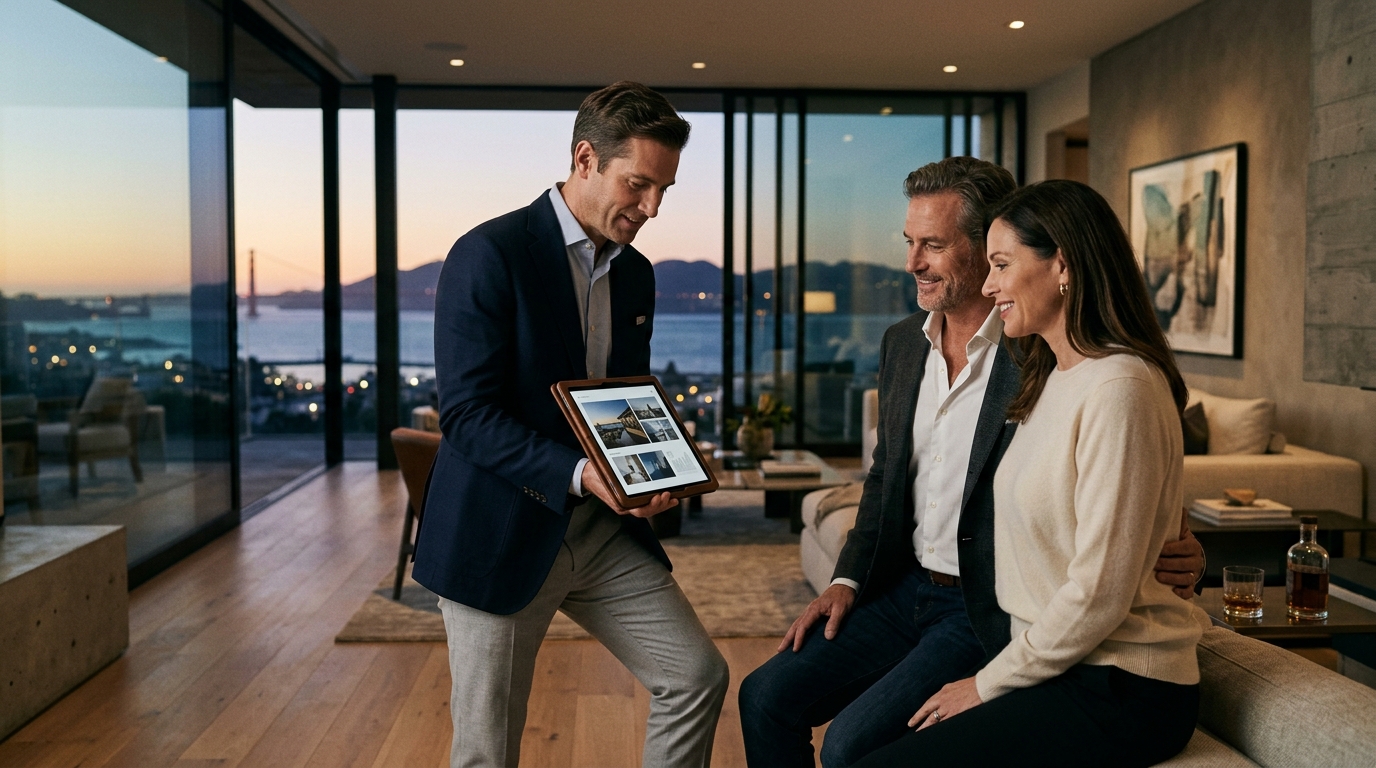
Marketing Strategies That Attract Serious Buyers to Premium Properties
Selling a luxury home in the San Francisco Bay Area is not the same as listing a standard property. The buyer pool is smaller, expectations are higher, and generic marketing simply does not work. According to NAR's 2025 Profile of Home Buyers and Sellers, 52% of all buyers found their home online, yet luxury buyers demand far more than a basic listing with a few photos. Premium properties require precision targeting, cinematic storytelling, and a concierge-level experience that matches the home's prestige. Here is every strategy top-producing agents use to connect serious buyers with high-end homes.
Why Luxury Marketing Is Fundamentally Different
Luxury real estate marketing is the strategic promotion of high-end residential properties to affluent buyers using channels and presentation standards that reflect prestige and lifestyle. Unlike standard listings, premium properties target a small, selective audience that already has significant financial resources.
In 2024, ultra-luxury homes in major U.S. markets took roughly 400% longer to sell than the average property. That slower pace means agents must nurture relationships and keep listings compelling over extended timelines. In the San Francisco market, where Philip Farr works with technology founders and high-net-worth families, each relationship carries outsized weight.
The Buyer Profile Has Changed
Millennials and Gen Z now account for over 30% of luxury buyers, according to NAR research. These younger buyers expect seamless digital experiences, sustainability features, and smart home integration. Agents who ignore this demographic shift risk losing a fast-growing segment of the premium market.
Cinematic Visuals and Virtual Tours
Professional photography is non-negotiable in high-end real estate. Premium visuals are the first thing a potential buyer sees, and they set the tone for every subsequent interaction. A cinematic property film is a short, high-production-value video that tells the story of a home rather than simply showing rooms.
Leading brokerages like Sotheby's International Realty use high-fidelity VR tours to showcase trophy properties, setting a new standard for digital presentations. Virtual reality walkthroughs let a buyer in London explore a penthouse in San Francisco in real time. This technology filters out casual browsers and ensures that in-person visitors are already emotionally invested.

Drone Footage and 3D Tours
Drone footage captures a property's grandeur and its relationship to the surrounding neighborhood. Combined with Matterport-style 3D tours, these assets give remote buyers complete spatial awareness. In a city like San Francisco, where architectural details and views command premiums, aerial imagery can be the difference between a scroll-past and a showing request. Philip Farr's approach to buyer representation emphasizes this level of visual detail for every listing evaluation.
Narrative-Driven Storytelling
A narrative-driven listing is a marketing approach that showcases a property's provenance, architectural pedigree, and lifestyle context rather than relying on bullet-point feature lists. Affluent buyers respond to stories about a home's design lineage, the craftspeople who built it, and the neighborhood culture it sits within.
Tailored storytelling resonates strongly with affluent audiences and helps listings stand out in competitive markets. Philip Farr's success stories illustrate how understanding a client's unique lifestyle translates into more compelling property matches and stronger offers.
Single-Property Websites
A dedicated microsite for a premium listing gives the property its own brand identity. It consolidates cinematic video, floor plans, neighborhood profiles, and scheduling tools in one place. This tactic signals exclusivity to buyers and provides agents with detailed analytics on visitor engagement.
Precision Digital Targeting
Mass lead generation rarely works in luxury real estate. Instead, agents use programmatic advertising to place content in front of affluent users on financial, lifestyle, and design platforms. Retargeting keeps the listing visible to buyers who have already engaged with property content online.
AI-Powered Personalization
CRM tools integrated with predictive analytics can identify which leads are ready to transact based on browsing behavior, then automatically serve personalized content. According to McKinsey research cited by Proven Partners, real estate developers can achieve more than 10% higher net operating income when they use generative AI to streamline marketing processes.
Social Media for Affluent Audiences
Short-form vertical video on Instagram Reels and TikTok reaches younger high-net-worth buyers where they already spend time. According to industry reporting, 60% of affluent buyers now discover homes via social media. Philip Farr maintains an active presence on Instagram, sharing curated content about San Francisco's most distinctive properties.
Private Events and Luxury Brand Partnerships
Exclusive, invitation-only events connect a property with the right demographic in person. Partnering with aligned luxury brands, such as high-end auto dealers, art galleries, or private aviation firms, creates authentic experiences that feel natural to affluent buyers. These collaborations generate referral pipelines and PR visibility simultaneously.
In San Francisco, where Philip Farr guides buyers through architecturally significant properties, private showings paired with curated experiences can elevate a listing's perceived value far beyond its square footage.
Luxury vs. Standard Marketing: A Comparison
| Element | Standard Marketing | Luxury Marketing |
|---|---|---|
| Photography | MLS-standard photos | Cinematic HDR, drone, and twilight shoots |
| Video | Optional walkthrough | Professionally produced property film |
| Listing Platform | MLS + Zillow | MLS + global luxury portals + single-property site |
| Targeting | Broad geographic ads | Programmatic ads on financial/lifestyle platforms |
| Staging | Light staging or none | Full professional staging with curated design |
| Events | Public open house | Private, invitation-only showings with brand partners |
| Timeline | ~60 days average | 88+ days for top 10% of homes |
Key Takeaways
- Luxury real estate marketing requires precision targeting, not mass lead generation.
- Cinematic video, drone footage, and VR tours are baseline expectations for premium properties in 2026.
- Narrative-driven storytelling that highlights architectural pedigree and lifestyle context outperforms bullet-point listings.
- Programmatic digital ads and AI-powered personalization help agents reach affluent buyers on the right platforms.
- Short-form social video reaches the growing segment of younger high-net-worth buyers.
- Private events and luxury brand partnerships create authentic in-person connections with serious prospects.
- Staged homes can sell up to 73% faster according to the Real Estate Staging Association.
Frequently Asked Questions
What is luxury real estate marketing?
Luxury real estate marketing is the promotion of high-end residential properties to affluent buyers. It focuses on presenting homes in a way that matches their prestige and price, using cinematic visuals, targeted digital campaigns, and exclusive events rather than standard MLS listings alone.
How long do luxury homes take to sell?
Premium properties typically sit on the market longer than average homes. In 2024, ultra-luxury homes in major U.S. markets averaged around 319 days on market, compared to fewer than 60 days for standard properties. In 2026, the top 10% of homes by value have a median of 88 days on market.
Do virtual tours actually help sell luxury homes?
Yes. VR walkthroughs allow remote buyers to experience a property's flow and scale before visiting in person. This pre-qualifies serious buyers, reduces unnecessary showings, and protects seller privacy.
Why is professional staging important for premium listings?
Professional staging highlights a home's layout, scale, and lifestyle potential. According to the Real Estate Staging Association (RESA), staged homes can sell up to 73% faster and often achieve higher offer prices.
What role does social media play in attracting luxury buyers?
Social platforms like Instagram and TikTok are where younger affluent buyers discover properties. Consistent, high-quality content builds agent authority and keeps listings visible to the right audience.
How does AI help market luxury properties?
AI-powered CRM tools analyze buyer behavior to predict which prospects are ready to transact. They automate personalized outreach, matching content to each buyer's specific criteria and engagement history.
Should luxury listings have their own website?
A single-property website gives a premium listing its own brand identity. It centralizes all marketing assets, provides detailed visitor analytics, and signals exclusivity to prospective buyers.
How does Philip Farr market premium properties in San Francisco?
Philip Farr combines deep neighborhood expertise, data-driven market analysis, and a personalized, white-glove approach for each client. His background in negotiation and technology gives buyers and sellers a distinct advantage in San Francisco's competitive luxury market. Learn more on the about page.
Ready to Buy or Sell a Premium Property in San Francisco?
Whether you are searching for an architecturally significant home or preparing to list a luxury property, working with a specialist makes the difference. Contact Philip Farr for a complimentary consultation and experience the kind of bespoke, atelier-level service that San Francisco's most discerning clients trust.