

Questions to Ask Before Buying a Historic Property in the San Francisco Bay Area
Buying a historic property in San Francisco is one of the most rewarding investments you can make, but it comes with layers of complexity that standard home purchases simply do not. From navigating preservation regulations to understanding seismic retrofit requirements, the questions you ask your luxury real estate agent before writing an offer can save you hundreds of thousands of dollars and months of frustration. San Francisco has over 300 designated Article 10 Landmarks and more than 1,110 lots within Article 10 Historic Districts, plus thousands more properties that may qualify for historic status. Here are the essential questions every serious buyer should ask.
1. What Is the Property's Historic Designation Status?
A historic designation is an official classification that recognizes a property's architectural, cultural, or historical significance. In San Francisco, there are three separate levels of designation: Local (Article 10 and 11), State (California Register), and Federal (National Register of Historic Places). Each carries different implications for what you can and cannot do with the property.
Ask your agent whether the home is individually landmarked, contributory to a historic district, or simply located in a neighborhood with older housing stock. The distinction matters enormously. A property listed as an Article 10 Landmark faces stricter exterior alteration review than one that has never been formally surveyed. Your agent should be able to pull the property's status from the Citywide Cultural Resources Survey and explain what it means for your plans.
2. What Renovation Restrictions Will I Face?
Historic properties often come with rules governing what changes you can make to the exterior, and sometimes the interior. Article 10 buildings in San Francisco require a Certificate of Appropriateness for exterior alterations. However, Article 10 does not specifically designate the historic interiors of residential homes in landmark districts, which gives owners more flexibility than many buyers expect.
Architectural Styles and Their Implications
San Francisco's historic homes span several distinct architectural periods. Understanding your property's style helps you anticipate restoration costs and regulatory requirements.
| Architectural Style | Era | Key Features | Typical Neighborhoods |
|---|---|---|---|
| Victorian (Queen Anne, Italianate, Stick) | 1860s-1900s | Intricate woodwork, bay windows, high ceilings | Alamo Square, Haight-Ashbury, Pacific Heights |
| Edwardian | 1900s-1920s | Simpler lines, built-in cabinetry, boxed bay windows | Pacific Heights, Western Addition, Noe Valley |
| Craftsman Bungalow | 1900s-1930s | Handcrafted details, natural materials, low-pitched roofs | Berkeley, Oakland Hills, Bernal Heights |
| Spanish Mediterranean | 1920s-1940s | Stucco walls, arched windows, tile roofs | Central Sunset, St. Francis Wood, Forest Hill |
A skilled luxury buyer's agent will know which neighborhoods reward museum-level restoration and which ones do not, helping you avoid overspending on details that will not return value at resale.
3. Has the Property Been Seismically Retrofitted?
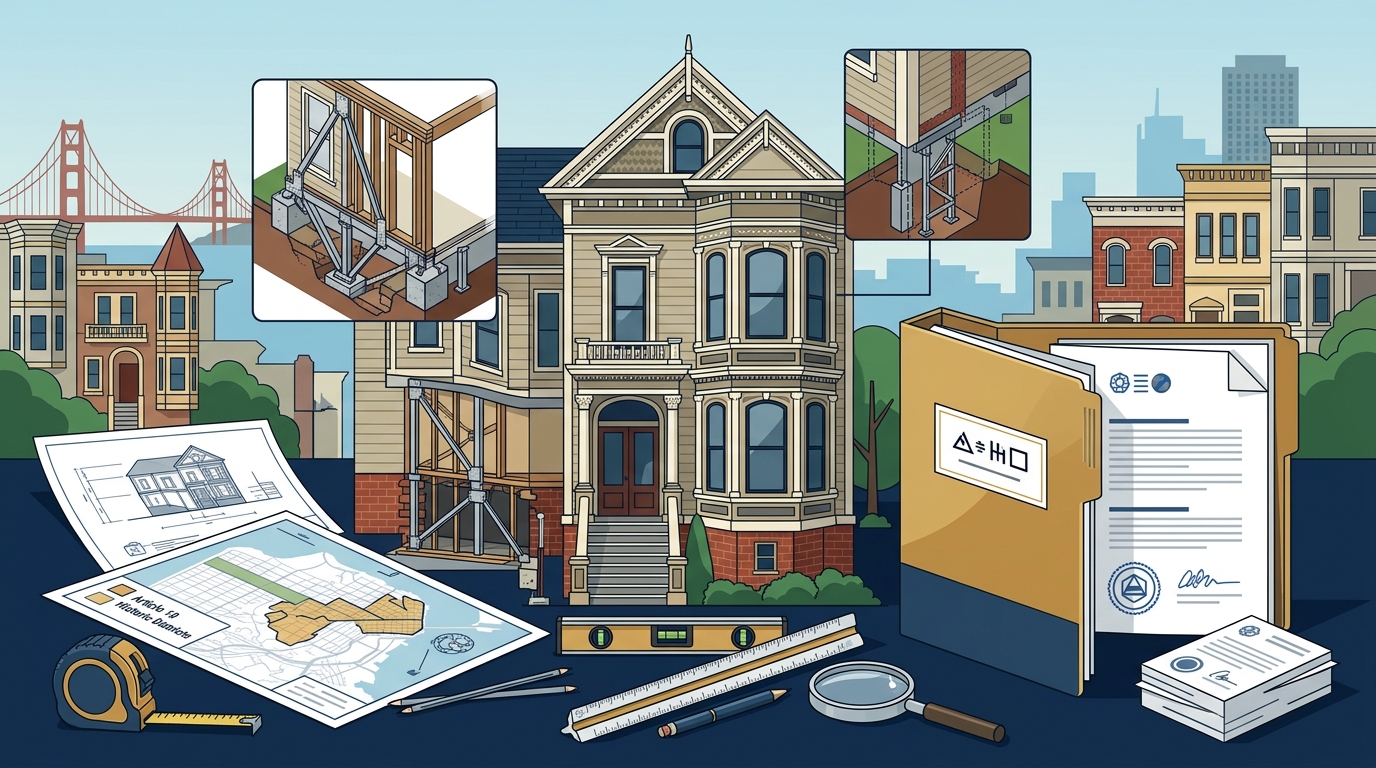
Seismic retrofitting is the process of strengthening a building's structure to better resist earthquake forces. This is a non-negotiable question in San Francisco, where many pre-1906 and pre-1940 homes still sit on original pier-and-post or cripple wall foundations. A retrofit can cost anywhere from $30,000 to $150,000 or more depending on the structure.
Ask to see permits and engineering reports confirming any completed seismic work. If the property has not been retrofitted, factor this cost into your offer and negotiate accordingly. An experienced agent like Philip Farr, who grew up in a multi-generational Bay Area real estate family, can help you assess these structural considerations and connect you with qualified engineers.
4. Does This Property Qualify for Mills Act Tax Savings?
The Mills Act is a California state law that allows cities to enter into contracts with owners of historic structures, providing property tax reductions in exchange for ongoing preservation. It is recognized as the single most important economic development incentive program in California for the restoration and preservation of qualified historic buildings. In San Francisco, participating owners can see tax savings of 40% to 60%.
Who Qualifies?
To qualify, a property must be listed on the National Register, designated as a City Landmark under Article 10, or hold another recognized historic status. The application deadline is before May 1 of each year. Contracts run for a minimum of 10 years and are recorded on the property deed, meaning they transfer to future owners.
Ask your agent whether the current owner holds a Mills Act contract, whether the property is eligible for one, and what the estimated tax impact would be. This single question could save you tens of thousands of dollars annually.
5. What Are the Insurance and Maintenance Cost Realities?
Homeowners insurance is a critical consideration when buying an older home in the Bay Area. San Francisco faces unique risks from earthquakes, coastal flooding, and aging housing stock. Annual insurance costs for older homes often range from $1,200 to $2,500 or more, and earthquake insurance is a separate, additional policy.
Maintenance costs for historic properties also run higher than modern construction. Ask your agent about the condition of original features like crown moldings, hardwood floors, and windows. Sympathetic updates that complement the home's architectural style should be prioritized over wholesale replacement. Review the property's disclosure documents carefully for deferred maintenance items.
6. Can You Access Off-Market Historic Inventory?
An off-market property is a home available for purchase that is not publicly listed on the MLS. In San Francisco's luxury market, 20-30% of luxury transactions in neighborhoods like Pacific Heights and Presidio Heights include off-market components. Many legacy properties have been in families for decades, and when they sell, it is often through private channels.
This is especially relevant for historic homes, where multi-generational estates rarely hit the open market. Ask your agent about their network for accessing pocket listings. Philip Farr has helped numerous clients secure homes through off-market channels, leveraging deep broker relationships and systematic tracking of withdrawn and expired listings. Read more about his approach to finding off-market properties in San Francisco.
Key Takeaways
- Always verify a property's historic designation status before making an offer, as it directly affects renovation permissions and tax benefits.
- San Francisco has three levels of historic designation (Local, State, Federal), each with distinct regulatory implications.
- Seismic retrofitting is essential for older homes and can cost $30,000 to $150,000 or more.
- The Mills Act can reduce property taxes by 40-60% for qualifying historic homes in San Francisco.
- Insurance for historic Bay Area properties typically ranges from $1,200 to $2,500+ annually, with earthquake coverage as a separate cost.
- Up to 30% of luxury transactions in top San Francisco neighborhoods occur off-market, making agent network access critical.
- Working with a specialized buyer's agent who understands historic properties is the most important decision you will make.
Frequently Asked Questions
What is a historic property designation in San Francisco?
A historic property designation is an official recognition that a building holds architectural, cultural, or historical significance. San Francisco uses Article 10 for landmarks and historic districts, Article 11 for downtown conservation districts, and also recognizes listings on the California and National Registers.
How much can the Mills Act save me on property taxes?
Mills Act contracts in San Francisco typically reduce property taxes by 40% to 60%. The exact savings depend on the property's assessed value, its income potential, and the scope of your preservation plan. Applications must be submitted before May 1 each year.
Do I need permission to renovate the interior of a historic home?
In most cases, Article 10 does not regulate the interiors of residential properties in San Francisco's landmark districts. However, the Planning Department encourages retaining original interior features, and doing so according to the Secretary of the Interior's Standards can unlock additional tax benefits for National Register properties.
What should I budget for seismic retrofitting?
Budget $30,000 to $150,000 or more, depending on the home's size, foundation type, and structural condition. Pier-and-post and cripple wall systems are the most common foundation types in pre-1940 San Francisco homes and each requires different engineering solutions.
How do I find off-market historic homes in San Francisco?
The best approach is to work with a well-connected buyer's agent who maintains strong broker-to-broker relationships in neighborhoods with high concentrations of historic homes. Philip Farr systematically tracks coming-soon, withdrawn, and expired listings to identify opportunities that never reach the public MLS. Contact Philip to start your search.
Are Victorian and Edwardian homes a good investment in San Francisco?
Yes. Architecturally significant homes in neighborhoods like Pacific Heights, Alamo Square, and Haight-Ashbury have historically appreciated well due to limited supply and strong buyer demand. Homes with intact original details tend to command premium pricing.
What insurance do I need for a historic home in San Francisco?
You will need standard homeowners insurance plus a separate earthquake insurance policy. Due to wildfire exposure and rising rebuild costs across California, premiums for older homes can be higher than average. Always get quotes from multiple carriers before closing.
How do I verify if a property has been seismically retrofitted?
Request permit records from the San Francisco Department of Building Inspection and ask the seller for engineering reports. Your buyer's agent should review these documents as part of the due diligence process. See how Philip Farr's clients have benefited from his meticulous document review.
Ready to Find Your Historic San Francisco Home?
Buying a historic property requires an agent who understands preservation regulations, structural realities, and the nuances of San Francisco's luxury market. Philip Farr brings multi-generational Bay Area real estate knowledge, a data-driven negotiation approach honed from managing $200M+ in contracts, and deep off-market access in the city's most coveted neighborhoods. Schedule a free consultation with Philip Farr to discuss your search for the perfect historic home in San Francisco.