
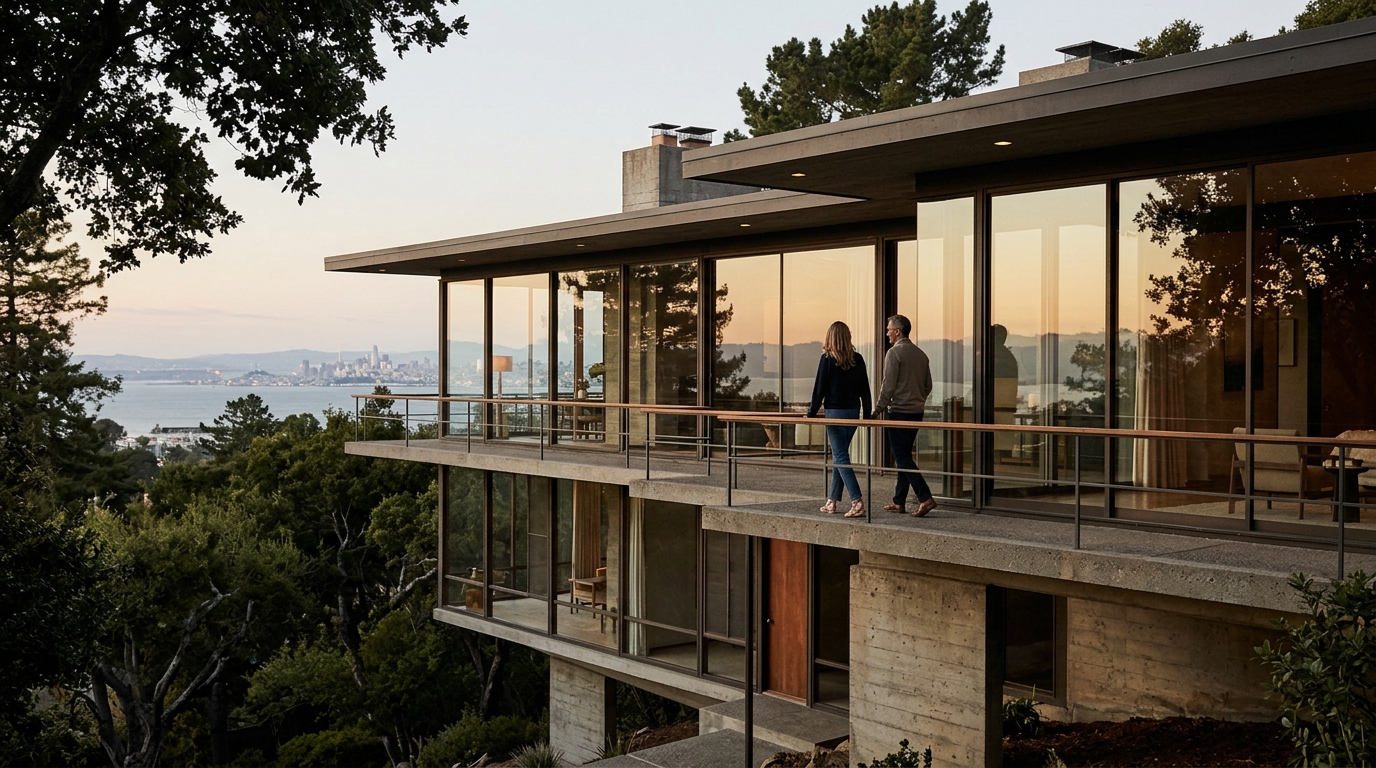
The San Francisco Bay Area is home to some of the most architecturally remarkable residential properties in the United States. From grand Victorian mansions in Pacific Heights to mid-century modern gems tucked into hillside lots, the region offers a living museum of design spanning more than 150 years. With luxury home sales in San Francisco jumping 22.2% year over year in early 2026 and the median luxury sale price approaching $6.8 million, demand for distinctive, architect-designed homes has never been stronger. This guide explores the architectural styles, prime neighborhoods, and strategies that define the pursuit of a truly significant property in the Bay Area.
What Makes a Property Architecturally Significant
An architecturally significant property is a home whose design, construction, or historical context sets it apart from the surrounding housing stock. These properties are typically designed by a named architect, built in a recognizable style, or listed on a historic register. Significance can also come from innovative materials, pioneering structural techniques, or cultural associations with a particular era or movement.
In the Bay Area, architectural significance often intersects with provenance. A Julia Morgan-designed Craftsman in Berkeley or a William Wurster home in the hills of Woodside carries a legacy that transcends square footage and lot size. For buyers who value design as much as location, these homes represent both a lifestyle choice and a long-term investment.
Iconic Architectural Styles Found in the Bay Area
Victorian and Edwardian
Victorian architecture is synonymous with San Francisco. Built during the latter half of the 19th century, these ornate homes are found in neighborhoods like Pacific Heights and Haight-Ashbury. Sub-styles include Queen Anne, Gothic Revival, and Italianate, each featuring decorative trim, bay windows, and steep roofs. After the 1906 earthquake, Edwardian-style homes emerged with simpler profiles and lighter colors.

Mid-Century Modern
Mid-century modern architecture is a design movement that gained popularity in the mid-20th century, characterized by clean lines, open floor plans, and integration with the natural landscape. Architects like Henry Hill designed notable homes throughout the Bay Area, including redwood-finished residences in San Francisco's Golden Gate Heights neighborhood with signature center atriums.
Spanish Colonial and Monterey Revival
Spanish Colonial homes feature adobe-style construction, red clay-tiled roofs, and stucco exteriors. The Monterey Revival variation, developed in California, typically includes two-story layouts with plastered exteriors and shutters. You will find excellent examples in Palo Alto's Professorville Historic District, where preservation architects have completed more than 30 renovations.
| Architectural Style | Era | Key Features | Where to Find Them |
|---|---|---|---|
| Queen Anne Victorian | 1880s-1900s | Turrets, patterned shingles, asymmetrical facades | Pacific Heights, Haight-Ashbury |
| Edwardian | 1900s-1920s | Simpler profiles, light colors, less ornate trim | Western Addition, Noe Valley |
| Mid-Century Modern | 1940s-1970s | Clean lines, open plans, walls of glass | Golden Gate Heights, Marin County |
| Spanish Colonial | 1920s-1940s | Red tile roofs, stucco, arched doorways | Palo Alto, Presidio |
| Contemporary/Modern | 2000s-present | Sustainable materials, smart tech, indoor-outdoor flow | SoMa, Dogpatch, Sea Cliff |
Top Neighborhoods for Architecturally Significant Homes
Pacific Heights and Presidio Heights
Pacific Heights remains San Francisco's most globally recognized prime address, with median home prices clearing $7.5 million and trophy mansions along Broadway and Pacific Avenue regularly trading above $25 million. Presidio Heights features multi-generational family estates and legacy properties that rarely appear on public listings. Philip Farr lives in Pacific Heights and brings deep neighborhood knowledge to every client relationship.
Russian Hill, Nob Hill, and the Marina
Russian Hill and Nob Hill offer a mix of grand Edwardian homes and early 20th-century apartment buildings with sweeping bay views. The Marina district, rebuilt after the 1906 earthquake, showcases Mediterranean Revival and Spanish Colonial architecture. Explore San Francisco's best neighborhoods to compare lifestyle and design options.
Marin County and the Peninsula
Beyond the city, Marin County and Peninsula towns like Atherton, Woodside, and Los Altos Hills hold architecturally significant estates on expansive lots. These areas attract buyers seeking privacy, mature landscapes, and architect-designed homes that blend seamlessly with the natural setting.
2026 Luxury Market Snapshot
The San Francisco luxury market is outperforming the nation. According to Redfin's March 2026 report, the median luxury sale price reached $6,808,561, up 9% year over year. Luxury homes sold in a median of just 12 days, the fastest of any major U.S. metro, and nearly 62.4% of luxury homes sold within two weeks.
This surge is driven by AI-related wealth, a persistent supply shortage (luxury inventory fell 15.2% year over year), and intense competition among qualified buyers. Single-family homes citywide sell at 10% to 15% above asking price, with overbids of $500,000 or more common in desirable neighborhoods.
For architecturally significant properties, competition is even fiercer. These homes are inherently scarce, and many trade privately. Working with an agent who has a proven buyer strategy and deep broker relationships is essential to gaining access.
The Off-Market Advantage for Rare Properties
An off-market property is a home sold privately, without public MLS listing. In San Francisco's luxury segment, 20% to 30% of transactions in neighborhoods like Pacific Heights and Presidio Heights involve off-market components. Sellers of architecturally significant homes often prefer discretion, particularly tech executives and established families who value privacy.
Philip Farr has built his practice around this reality. Over 30% of his transactions are off-market, giving his clients access to exclusive inventory that never appears on public platforms. His approach combines systematic tracking of withdrawn and expired listings with trust-based relationships cultivated across the brokerage community. Read his detailed breakdown on how to find off-market properties in San Francisco.
What to Evaluate Before Buying
Purchasing an architecturally significant home requires due diligence beyond standard inspections. Consider the following:
- Architectural provenance: Verify the original architect, any modifications, and whether the home is on a local or national historic register.
- Preservation requirements: Landmark designation may restrict exterior alterations, additions, or demolition.
- Seismic readiness: Pre-1970s homes may need foundation upgrades or soft-story retrofits.
- Restoration costs: Original materials like old-growth redwood, period hardware, and custom millwork can be expensive to maintain or replicate.
- Long-term value: Architecturally significant homes historically appreciate faster than comparable non-pedigreed properties.
Philip Farr's background as a former Deloitte consultant and Customer Success executive gives him a data-driven, strategic perspective on evaluating these factors. Read client success stories to see how this approach delivers results.
Key Takeaways
- An architecturally significant property is defined by its design pedigree, named architect, or historic register status.
- The Bay Area features five major residential styles: Victorian, Edwardian, Mid-Century Modern, Spanish Colonial, and Contemporary.
- Pacific Heights leads with median luxury prices above $7.5 million and the highest concentration of trophy estates.
- San Francisco luxury home sales jumped 22.2% year over year in March 2026, with a median sale price near $6.8 million.
- Up to 30% of luxury transactions in top neighborhoods happen off-market, requiring strong agent relationships for access.
- Buyers should evaluate architectural provenance, preservation restrictions, seismic readiness, and restoration costs.
- Working with a specialist like Philip Farr, who combines architectural passion with analytical expertise, is the most effective path to securing a rare property.
Frequently Asked Questions
What qualifies a home as architecturally significant?
A home is considered architecturally significant when it was designed by a recognized architect, represents a notable architectural style or movement, or is listed on a historic register. Unique structural innovations, high-quality craftsmanship, and cultural context also contribute to significance.
Which San Francisco neighborhoods have the most architecturally significant homes?
Pacific Heights, Presidio Heights, Russian Hill, Nob Hill, and Haight-Ashbury have the densest concentrations of Victorian, Edwardian, and early 20th-century architect-designed homes. Mid-century modern properties are more common in the Sunset District and Marin County.
How much do architecturally significant homes cost in San Francisco?
Prices vary widely. A restored Victorian in the Western Addition may start around $2 million, while a landmark Pacific Heights mansion can exceed $25 million. The median luxury sale price across the city reached approximately $6.8 million in early 2026.
Are off-market listings common for architecturally significant properties?
Yes. In neighborhoods like Pacific Heights and Sea Cliff, 20% to 30% of luxury transactions involve off-market components. Philip Farr completes over 30% of his transactions off-market, giving clients access to properties that never appear on public platforms.
What is the current state of the San Francisco luxury market?
As of March 2026, San Francisco luxury home sales rose 22.2% year over year, luxury inventory fell 15.2%, and the typical high-end home went under contract in just 12 days. AI-driven wealth and a persistent supply shortage are the primary catalysts.
Do historic designations affect what I can do with a property?
Yes. Landmark or historic district designation can restrict exterior modifications, require design review for additions, and limit demolition options. However, these designations also protect the character and value of the property over time.
Why should I work with a specialist agent for architecturally significant homes?
These properties require knowledge of architectural history, preservation regulations, restoration costs, and off-market sourcing strategies. A specialist agent like Philip Farr combines lifelong architectural passion with strategic negotiation expertise to help clients secure rare properties efficiently.
How fast are luxury homes selling in San Francisco right now?
Luxury homes in San Francisco are selling in a median of 12 days as of March 2026, the fastest pace of any major U.S. metro. Nearly 62.4% of luxury homes sold within two weeks.
Find Your Architecturally Significant Home
If you are searching for an architecturally significant property in the San Francisco Bay Area, Philip Farr offers the market expertise, off-market access, and design-informed perspective to help you find and secure the right home. Schedule a free consultation today to start your search.