
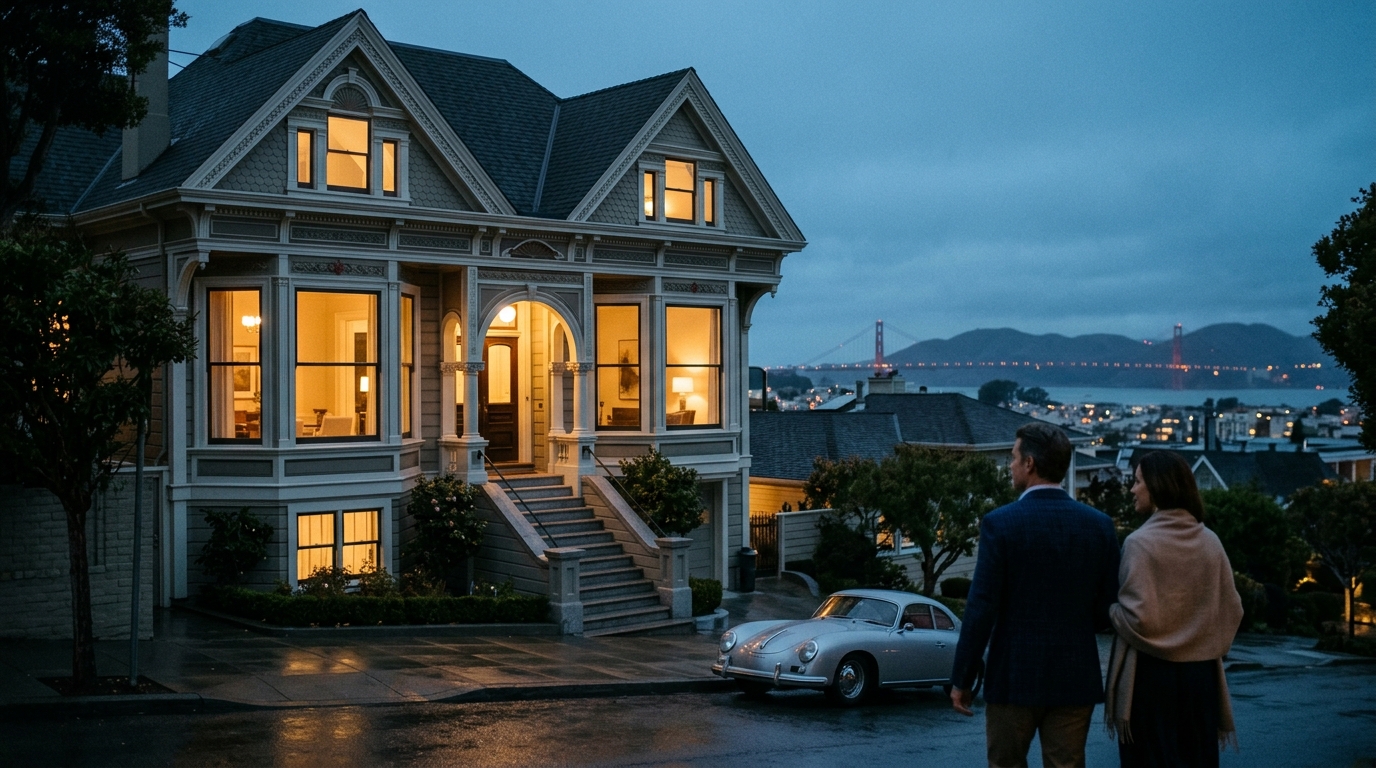
Can You Afford an Architecturally Significant Property in the San Francisco Bay Area?
Architecturally significant properties are homes designed by renowned architects or built in landmark styles that carry historic, aesthetic, or cultural value beyond their square footage. In the San Francisco Bay Area, these include Victorian mansions, Edwardian row houses, mid-century modern gems, and contemporary residences by noted designers. With the median home price in San Francisco County reaching $2,127,500 in April 2026 and luxury-tier medians climbing well beyond that, buyers need a clear understanding of the financial landscape before pursuing one of these exceptional homes. This guide breaks down every factor that determines whether an architecturally significant Bay Area property fits your budget.
What Makes a Property "Architecturally Significant"?
An architecturally significant property is a residence whose design, construction method, or designer carries recognized historical or artistic importance. In San Francisco, that spans everything from Willis Polk Victorians in Pacific Heights to Joseph Eichler mid-century homes in the South Bay to contemporary works by firms like Stanley Saitowitz or Robert Rudeen.
These homes often feature period-specific details such as ornamental facades, soaring ceilings, and handcrafted millwork that distinguish them from standard inventory. Their scarcity drives premium pricing: buyers are paying for irreplaceable craftsmanship and a story no new construction can replicate.
The 2026 Bay Area Price Landscape
The Bay Area market in 2026 is resilient and competitive. According to Norada Real Estate, the median Bay Area home price sits at $1,400,000, while San Francisco County itself saw a 19.5% year-over-year jump to $2,127,500. Homes in prime corridors trade materially higher.
For architecturally significant properties, expect prices well above the median. According to The Real Deal, the median sales price for houses in Pacific Heights, Presidio Heights, the Marina, and Cow Hollow hit $6 million in 2025, a 20% increase from the prior year. The AI boom has compounded this demand, with Redfin reporting a 13.4% surge in luxury ZIP code prices since ChatGPT's launch.
| Price Tier | Median Sale Price | Typical Property Type |
|---|---|---|
| Starter (5%-35%) | $947,311 | Condos, smaller units |
| Mid (35%-65%) | $1,502,382 | Single-family, townhomes |
| High (65%-95%) | $2,542,919 | Larger single-family, renovated Victorians |
| Luxury (Top 5%) | $7,406,838 | Architectural estates, landmark homes |
Data via Stacker/Redfin. Most architecturally significant properties fall in the High to Luxury tiers.
Income and Down Payment Requirements
The 28/36 rule is a lending guideline stating that no more than 28% of gross monthly income should go to housing costs, and no more than 36% to total debt. For a $2.5 million architectural home with 20% down ($500,000), the monthly mortgage payment on a $2 million jumbo loan at approximately 6.5% reaches roughly $12,600 in principal and interest alone. Add property taxes, insurance, and maintenance, and total monthly housing costs can exceed $15,000.
That translates to a required household income of roughly $500,000 to $650,000 per year. For homes at the $6 million Pacific Heights median, buyers typically need seven-figure incomes or substantial liquidity. According to JVM Lending, even for a median-priced SF home at $1.5 million, buyers need $270,000 to $370,000 annually depending on down payment size.

The Role of Stock Compensation and Liquidity Events
In the Bay Area, RSU vesting schedules and IPO liquidity events play a critical role in unlocking buying power for tech executives and founders. Cash-buyer share above $3 million consistently exceeds 50%, meaning many architectural-home buyers bypass traditional lending entirely. If you are exploring this approach, Philip Farr's analytical background in negotiating $200M+ in contracts translates directly into structuring competitive all-cash or hybrid offers.
Top Neighborhoods for Architectural Properties
Pacific Heights and Presidio Heights
These neighborhoods are the epicenter of San Francisco's architectural heritage. Tudor Revivals, grand Edwardians, and stately Beaux-Arts homes line the tree-shaded streets. The $6 million median house price reflects the prestige and scarcity. Many transactions happen off-market through trusted agent networks, with 20-30% of luxury deals occurring as pocket listings.
The Marina and Cow Hollow
Mediterranean Revival and Art Deco homes give these waterfront-adjacent neighborhoods distinct character. Prices are slightly more accessible than Pacific Heights while still commanding strong premiums. Philip Farr has helped clients secure homes in the Marina steps from the Palace of Fine Arts.
Broader Bay Area Options
Mid-century modern buyers can look to the East Bay (particularly the Oakland and Berkeley hills) and Marin County, where Eichler homes and post-and-beam designs start in the $1.5 to $3 million range. Marin County's median hit $1,810,000 in April 2026 with a 5.2% year-over-year appreciation, offering a relative value play for architectural enthusiasts.
Financing Strategies for Luxury Buyers
A jumbo loan is a mortgage that exceeds the conforming loan limit, which stands at $1,249,125 for San Francisco, San Mateo, and Santa Clara counties in 2026. Most architecturally significant purchases require jumbo financing or cash.
Key strategies include:
- Adjustable-rate mortgages (ARMs): A 7/6 ARM at 5.50% versus a 30-year fixed at 6.25% on a $2 million loan can save roughly $960 per month, lowering the required income by approximately $41,000 per year.
- Interest-only periods: Some jumbo lenders offer 10-year interest-only options, reducing initial monthly payments significantly for buyers expecting income growth or a liquidity event.
- Asset-based lending: Buyers with large portfolios but unconventional income (founders, investors) can qualify based on assets rather than W-2 income.
Working with a buyer's agent who understands these structures is essential. Philip Farr's data-driven negotiation process results in 90% of buyers going into contract within one to two offers.
Hidden Costs of Owning a Historic or Architectural Home
Architecturally significant homes carry ownership costs that generic calculators miss. Restoration-grade materials, specialized contractors, and compliance with local historic preservation codes can add 20-40% to standard renovation budgets. Earthquake retrofitting is another consideration. The California Earthquake Authority provides residential coverage, but premiums vary by construction era and foundation type.
Property taxes in San Francisco run approximately 1.18% of assessed value. On a $3 million purchase, that is roughly $35,400 per year. Insurance costs have also risen sharply in fire-risk and older-construction zones. Budget an additional 1-2% of home value annually for ongoing maintenance of period-specific features like copper roofing, stained glass, or redwood siding.
Before committing, schedule a consultation with an agent who specializes in these properties. Reach out to Philip Farr for a candid assessment of total cost of ownership for any listing you are considering.
Key Takeaways
- Architecturally significant homes in San Francisco typically fall in the $2.5M to $7M+ range, with Pacific Heights and Presidio Heights anchoring the top end at a $6 million median.
- Buyers generally need $500,000+ in household income or substantial liquid assets to comfortably afford a High-tier architectural property.
- The AI-driven tech boom has pushed Bay Area luxury prices up 13.4% since late 2022, intensifying competition for landmark homes.
- Jumbo loans, ARMs, and asset-based lending are the primary financing tools for this segment.
- Hidden costs including restoration, earthquake retrofitting, and higher insurance premiums can add 20-40% beyond the purchase price over time.
- Off-market inventory accounts for 20-30% of luxury transactions in prime neighborhoods, making agent relationships critical.
- Working with a specialist like Philip Farr provides access to pocket listings, data-backed negotiation, and deep neighborhood expertise.
Frequently Asked Questions
What income do I need to buy an architecturally significant home in San Francisco?
For properties in the $2.5M to $5M range, plan for a household income of $500,000 to $650,000 per year with 20% down. At the $6M+ level in Pacific Heights, most buyers use cash or have seven-figure incomes.
Are architecturally significant homes more expensive than regular luxury homes?
Yes. Architectural provenance, historical designation, and irreplaceable craftsmanship command a premium of 15-30% over comparable-sized homes without those features.
What neighborhoods have the most architecturally significant properties?
Pacific Heights, Presidio Heights, Russian Hill, and Sea Cliff lead in San Francisco. In the broader Bay Area, the Berkeley and Oakland hills offer notable mid-century modern inventory, and Marin County has significant examples as well. Explore San Francisco neighborhoods for more detail.
Can I find architecturally significant homes under $2 million in the Bay Area?
It is possible in select East Bay neighborhoods and parts of Marin County, particularly for mid-century modern homes or smaller historic properties. Within San Francisco proper, sub-$2M options are rare and typically condos within architecturally notable buildings.
How do I access off-market architectural properties?
Off-market or pocket listings require an agent with deep broker relationships. In Pacific Heights and Presidio Heights, 20-30% of luxury transactions include off-market components. Read more about finding off-market properties in San Francisco.
What are the biggest hidden costs of owning a historic home?
Restoration-grade materials, specialized labor, earthquake retrofitting, higher insurance premiums, and compliance with historic preservation requirements are the primary additional expenses. Budget 1-2% of home value annually for maintenance.
Is now a good time to buy a luxury home in San Francisco?
The market is active. San Francisco home prices were up 15% year-over-year through April 2026 with homes selling in a median of 14 days. Demand from the AI sector continues to fuel the luxury segment. However, mortgage rates in the 6.5-7% range mean financing costs are elevated compared to pre-2022 levels.
How can Philip Farr help me find an architecturally significant home?
Philip Farr specializes in luxury and architecturally notable properties across San Francisco. His data-driven approach, off-market access, and negotiation expertise have helped buyers secure dream homes in the city's most competitive neighborhoods. Schedule a free consultation to discuss your goals.
Ready to Explore Architecturally Significant Homes?
Finding the right architectural property in the Bay Area requires market expertise, off-market access, and a clear financial strategy. Contact Philip Farr today for a personalized consultation and start your search with an agent who understands both the numbers and the artistry behind every exceptional home.