

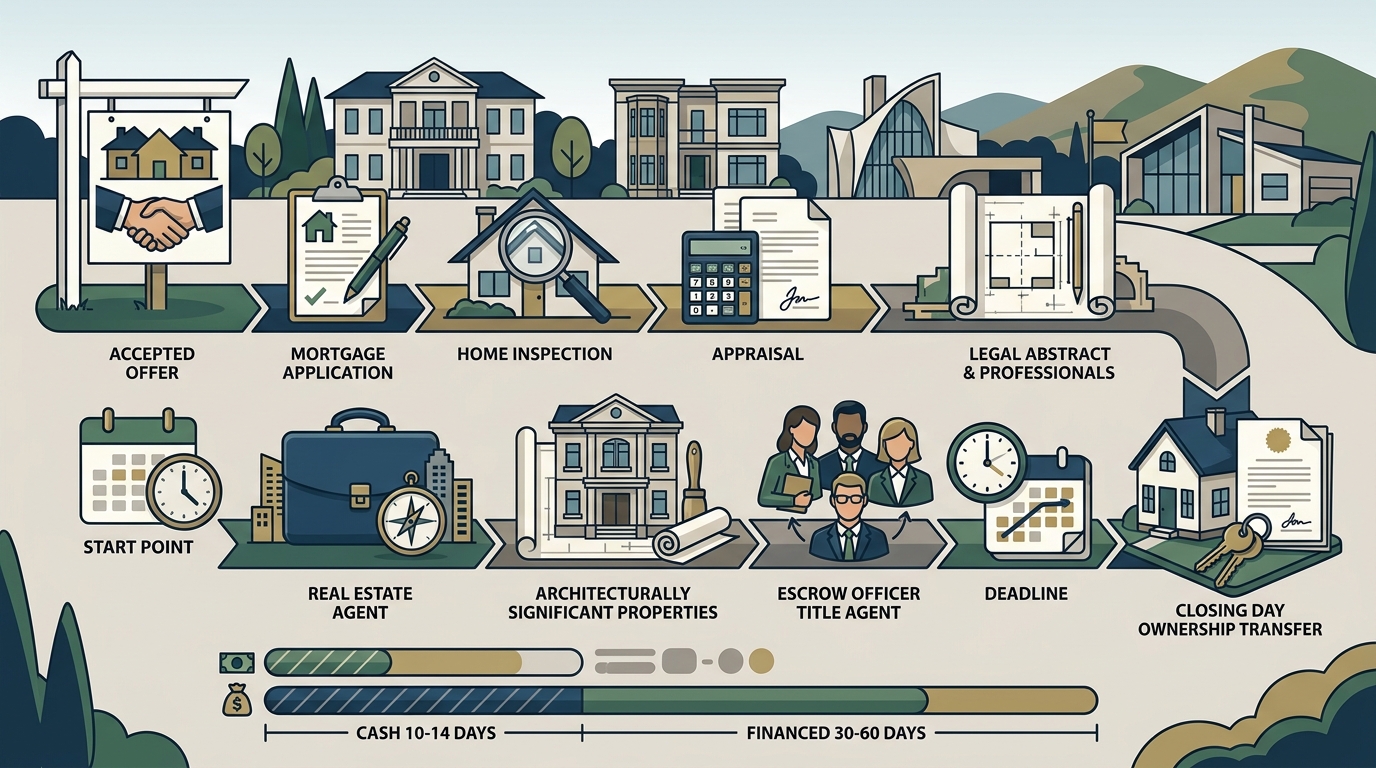
Buying or selling a home involves dozens of coordinated steps, strict deadlines, and multiple professionals working in concert. A residential property transaction is the legal and financial process through which ownership of a home transfers from seller to buyer. For most financed purchases, the timeline from accepted offer to closing day spans 30 to 60 days, though all-cash deals can close in as few as 10 to 14 days. Understanding each phase removes uncertainty and helps you make confident decisions. In the San Francisco Bay Area, where competition is fierce and luxury properties move quickly, having an experienced agent like Philip Farr by your side can compress timelines and protect your interests at every milestone.
Pre-Approval and Financial Preparation
Mortgage pre-approval is the process of verifying your income, assets, and credit with a lender before you begin house hunting. It establishes your budget and signals to sellers that you are a serious, qualified buyer. According to the NAR 2025 Profile of Home Buyers and Sellers, 88% of buyers worked with a real estate agent, and having financing lined up early gives you a competitive edge.
In San Francisco's luxury market, many repeat buyers arrive with significant equity. NAR data shows 30% of repeat buyers in 2025 paid all cash, bypassing financing entirely. Whether you finance or pay cash, completing this step before viewing homes saves weeks.
Property Search and Selection
The median search time for buyers nationally is about 10 weeks, according to NAR. In San Francisco, that window can shrink considerably for well-prepared buyers. Philip Farr's data-driven approach helps clients get into contract within one to two offers, accelerating a phase that often stalls other buyers.
On-Market vs. Off-Market Properties
In neighborhoods like Pacific Heights and Presidio Heights, 20 to 30% of luxury transactions involve off-market or pocket listing components. Accessing these hidden opportunities requires an agent with deep broker relationships and local credibility.
Neighborhood Research
Evaluate commute times, school quality, walkability, and lifestyle fit. Philip Farr offers detailed San Francisco neighborhood guides to help buyers compare communities side by side.
Making an Offer and Negotiation
Once you find the right property, your agent prepares a purchase agreement stating price, contingencies, and timelines. The effective date is the day both buyer and seller sign and accept the final offer. All subsequent deadlines for inspections, loan approval, and contingencies are calculated from this date.
Negotiation can take anywhere from a single day in a competitive multiple-offer scenario to a week or more when counteroffers go back and forth. In San Francisco, strong offers backed by pre-approval or proof of funds tend to win. Philip Farr's clients have closed on their first offer thanks to his strategic positioning and negotiation expertise.
Escrow, Inspections, and Due Diligence
Escrow is the neutral holding period during which a third party manages funds and documents until all contract conditions are met. Once the offer is accepted and earnest money is deposited, the clock starts on several parallel activities.
Home Inspection
The inspection contingency period typically lasts 7 to 10 days. During this window the buyer can back out without losing their earnest money deposit if significant issues are found. The inspector submits a report, and if repairs are needed, your agent negotiates an addendum with the seller's side.
Seller Disclosures
California law requires sellers to provide detailed property disclosures covering known defects, natural hazards, and past repairs. Reviewing these documents carefully is critical for protecting your investment.
Financing, Appraisal, and Title
After inspections clear, the lender orders an appraisal to confirm the property's value supports the loan amount. An appraisal is a professional assessment of a home's market value conducted by a licensed appraiser. This step typically takes about one week.
Simultaneously, a title search confirms the seller has clear, undisputed ownership and that no liens or encumbrances exist. The mortgage contingency deadline usually falls about 30 days after the effective date. Once the lender issues a clear-to-close notice, you are almost at the finish line.
For cash buyers, the entire financing timeline disappears. There is no lender, no appraisal requirement (unless the buyer wants one), and no underwriting delay. This is why cash offers can close in as little as 10 days, as some of Philip Farr's clients have experienced.
Closing Day and Beyond
Before closing, the buyer conducts a final walkthrough, typically one to two days prior, to verify the home is in agreed-upon condition and any negotiated repairs are complete. On closing day, both parties sign documents including the deed, loan paperwork, and settlement statement. Funds are transferred, the deed is recorded with the county recorder's office, and the buyer receives the keys.
After closing, set up utilities, update your address, and begin enjoying your new home. A great agent stays in touch well beyond closing day. Browse recent transactions and current listings to see the caliber of properties Philip Farr handles in San Francisco.
Transaction Timeline at a Glance
| Phase | Typical Duration | Key Activities |
|---|---|---|
| Pre-Approval | 1 - 2 weeks | Lender review, credit check, budget set |
| Property Search | 2 - 10+ weeks | Showings, neighborhood research, shortlisting |
| Offer and Negotiation | 1 - 7 days | Purchase agreement, counteroffers, acceptance |
| Inspections and Due Diligence | 7 - 10 days | Home inspection, disclosures, repair negotiations |
| Financing and Appraisal | 2 - 4 weeks | Appraisal, underwriting, title search, clear-to-close |
| Closing | 1 day | Document signing, fund transfer, deed recording |
| Total (Financed) | 30 - 60 days from contract | |
| Total (All-Cash) | 10 - 14 days from contract |
Key Takeaways
- A financed residential transaction typically closes in 30 to 60 days from the accepted offer, while cash deals can close in 10 to 14 days.
- Pre-approval before house hunting saves time and strengthens your offer.
- The effective date of the contract starts the clock on all inspection, financing, and contingency deadlines.
- Home inspections usually occur within 7 to 10 days of contract execution.
- In San Francisco's luxury market, off-market properties account for 20 to 30% of high-end transactions in top neighborhoods.
- An experienced agent can compress timelines through strategic negotiation and proactive coordination.
- The final walkthrough, one to two days before closing, is your last chance to verify the property's condition.
Frequently Asked Questions
How long does a typical residential property transaction take?
From accepted offer to closing, most financed transactions take 30 to 60 days. Cash transactions can close in as few as 10 to 14 days because they eliminate appraisal requirements and lender underwriting.
What is the effective date in a real estate contract?
The effective date is the day the final offer or counteroffer is signed and accepted by both buyer and seller. All contract deadlines, including inspection and financing contingencies, are calculated from this date.
How long is the home inspection period?
The inspection contingency period is typically 7 to 10 days. During this time, the buyer can conduct inspections and negotiate repairs or withdraw from the transaction without forfeiting earnest money.
Can the closing timeline be shortened?
Yes. Cash offers, waived contingencies, and proactive coordination between agents, lenders, and title companies can significantly shorten the timeline. Some buyers have closed in as few as 10 days.
What happens on closing day?
Both parties sign legal documents, funds are transferred through escrow, the deed is recorded with the county, and the buyer receives possession of the property.
Do I need a real estate agent for a property transaction?
While not legally required, 88% of buyers and 91% of sellers used an agent in 2025, according to NAR data. An agent handles negotiations, coordinates deadlines, reviews disclosures, and protects your interests throughout the process.
What are common causes of closing delays?
Financing issues, low appraisals, missing documents, title defects, and unresolved inspection repairs are the most frequent causes. Working with a detail-oriented agent and responsive lender minimizes these risks.
How is the San Francisco Bay Area market different?
San Francisco features higher price points, competitive bidding, and a significant share of off-market luxury transactions. Buyers benefit from working with a locally specialized agent who understands neighborhood dynamics and has strong broker networks.
Ready to Start Your San Francisco Home Search?
Whether you are buying your first home or acquiring an architecturally significant property, understanding the transaction timeline puts you in control. Schedule a free consultation with Philip Farr to discuss your goals, get a personalized timeline, and experience the bespoke, atelier-level service that San Francisco's most discerning buyers trust.